
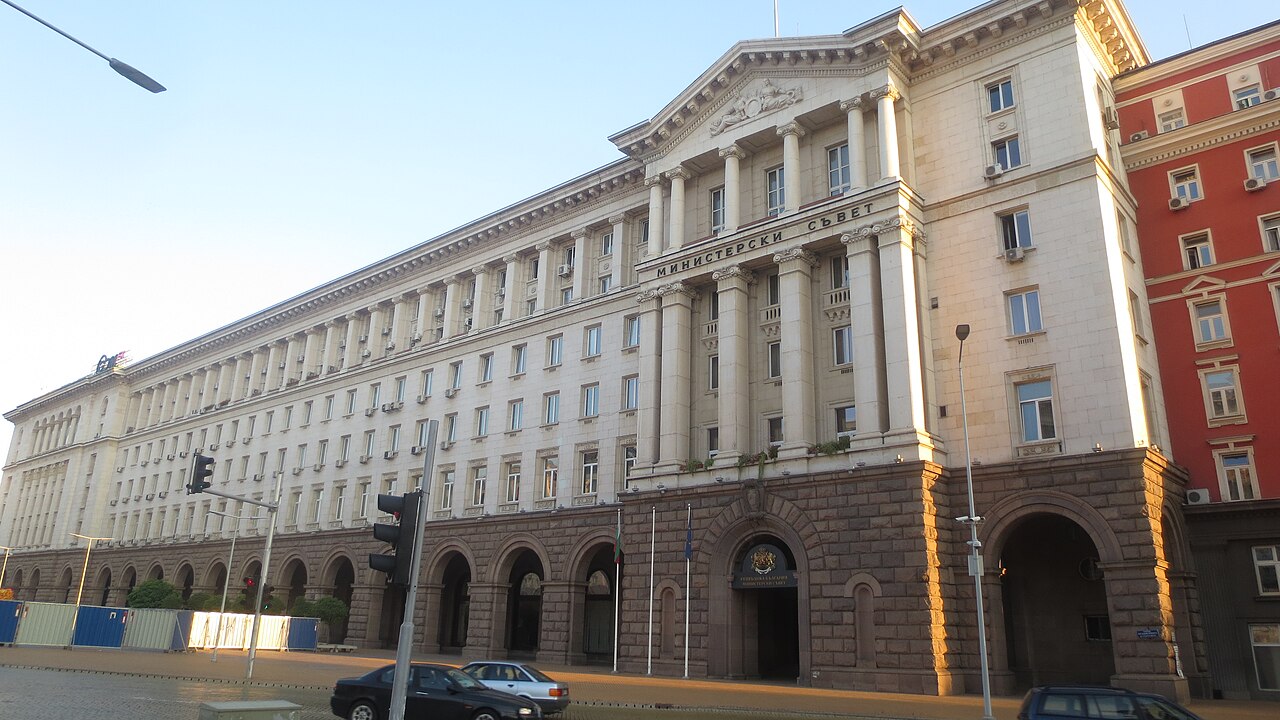
For about five years, someone had a quiet foothold in the systems Bulgaria's government agencies use to pass information to each other. On November 18, the country's Ministry of Innovation and Digital Transformation (MIDT) said the foothold was gone. It called the case the longest known cyber-espionage operation against the Bulgarian administration. Minister Ivan Vasilev called it "the longest and largest cyber espionage case ever recorded against the Bulgarian administration," according to a wire report carried by The Star.
The numbers are large. Vasilev said the attackers downloaded more than 130 GB of data over the five years, which he put at about 62 million pages. The Register reported that it had asked the government to confirm those figures. Officials have not said who did it.
Below is what Bulgaria has disclosed, what it has not, and what other organizations should take from it.
What happened?
According to MIDT's statement, attackers have had unauthorized access since 2021 to infrastructure that state institutions use to exchange information. Once inside, they moved laterally, meaning they spread from their first point of entry into other connected systems, and gathered sensitive information related to the state. The ministry says it has now cut the channels the attackers used to maintain and control their presence and has restricted their ability to move further through the network.
The ministry has not published technical detail about how the intruders first got in, what malware or tools they used, or which specific systems were reached. Its public statements describe the affected environment only as state administration networks and the infrastructure used for information exchange between institutions.
How did it go unnoticed for five years?
MIDT's explanation is architectural. It says the attackers stayed hidden because the government's earlier protections "did not work as a single integrated system." Put plainly, separate security tools each saw only part of the picture, and nobody had a combined view that would show a slow, patient intruder.
The intrusion came to light during work on a new national cybersecurity system. Bulgaria first disclosed it on August 5, when, as BNT reported, the ministry said it had found unauthorized access affecting administrative networks while working on that system. At the time it said the data pointed to long-term activity and that a large technical investigation was under way. The Register reports Vasilev's account that the intrusion was found over the summer during the system upgrade, and that teams then spent three to four months removing the attackers.
Vasilev also offered a political explanation. According to The Register, in an interview with bTV he blamed political instability and frequent changes of ministerial leadership for leaving government systems inadequately protected.
Who was behind it?
Bulgaria has not formally attributed the attack. According to The Register and the wire report in The Star, Vasilev said several international hacker groups had accessed the systems since 2021, but he did not name the groups or the countries behind them. ZeroDayFeed is not attributing the operation to any state or group, and readers should be wary of reports that do so without official confirmation.
Was citizens' personal data taken?
The government says it has found no evidence so far that citizens' personal data was compromised. MIDT's wording, that checks to date have not found a compromise of personal data, leaves room for that assessment to change as the investigation continues. By its own description, what the attackers collected was sensitive information related to the state.
How was the eviction handled?
The response was run by an interagency working group. According to MIDT, it included the ministry itself, the Ministry of Interior, the Ministry of Defense, the State Agency for National Security, military intelligence, the State Intelligence Agency and the e-Government infrastructure agency, supported by Information Services JSC and international cybersecurity partners. The group carried out a three-phase plan: establishing the full scale of the compromise, isolating the affected environment and tightening control over access to critical systems, and then ending all unauthorized access found. The operation has run since August.
The ministry says weaknesses are being fixed and access control tightened. The affected infrastructure will stay under heightened monitoring for 90 days. That step matters, because attackers who have spent years inside a network often leave backup ways in, and a later return is a well-known risk after a long intrusion.
There is also a legal track. The Star's wire report says the case has been referred to prosecutors, who will investigate whether Bulgarian authorities bear any responsibility, which points to an inquiry into how the access lasted so long and not only into the attackers.
What It Means for Defenders
Who is affected. The direct victims are Bulgarian state institutions that rely on the shared information-exchange infrastructure. Bulgaria has published no indicators of compromise, vulnerable product names or patch versions, so there is no specific fix to apply. MIDT has invited citizens, institutions and organizations with specific questions to write to [email protected]. Organizations that exchange data with Bulgarian government bodies should use that channel or their own national CERT if they have questions about exposure.
The broader lesson. This case did not hinge on a single dramatic exploit. It came down to visibility. Bulgaria's own diagnosis is that its defenses were not integrated, and the new national cybersecurity system, which it says gives a single picture of the state networks, found what the earlier tools had missed for years. The same weakness exists in plenty of private and public networks. Several practical points follow from the measures Bulgaria itself describes:
- Centralize your telemetry. If endpoint, network, identity and application logs sit in separate silos, slow lateral movement can stay below every individual alarm. Bringing them together, and having someone actually review them, is the kind of change that turned up this intrusion.
- Watch the shared systems. Information-exchange platforms, document gateways and inter-department integrations connect many systems at once. That makes them valuable places to sit for anyone collecting intelligence. Treat them as high-value assets with their own monitoring, not as plumbing.
- Tighten access control. Bulgaria says stricter access control is part of its fix. Review who and what can reach shared infrastructure, remove stale accounts and service credentials, and limit which systems can talk to each other so an intruder cannot move freely.
- Plan for the attacker coming back. The 90-day heightened-monitoring window exists to catch any attempt at re-entry. Removal is rarely clean on the first pass, so after any eviction, rotate credentials and keys tied to the affected environment and keep watching closely.
- Protect continuity. Vasilev's point about leadership turnover applies outside government too. Security programs that depend on one sponsor or one budget cycle tend to stall. Documented ownership and multi-year plans make it harder for gaps like this to stay open.
For U.S. federal contractors working through CMMC, the case is a useful reminder that the audit and accountability and incident response controls work best together. A logging requirement met by checking a box on each system separately does not give the integrated view that Bulgaria says was missing.
Sources
- Ministry of Innovation and Digital Transformation (Bulgaria): The state interrupted the longest known cyber-espionage operation against the Bulgarian administration (in Bulgarian)
- The Register: Bulgaria evicts cyber snoops who lurked inside government networks for 5 years
- The Star: Bulgaria uncovers huge cyber spying operation against state
- BNT: Bulgarian Government Detects Unauthorised Access Affecting Administrative Networks
