
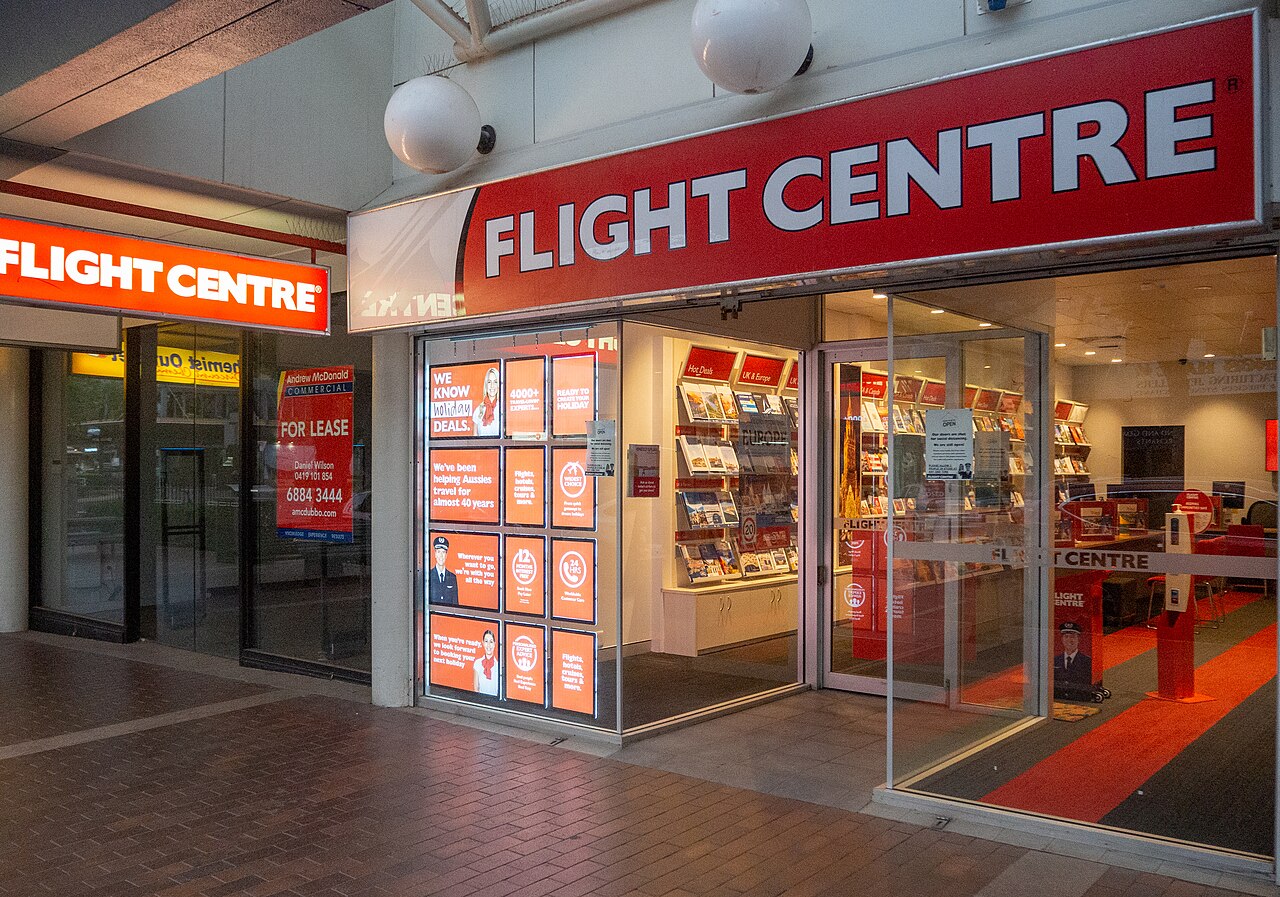
Flight Centre Travel Group, the Brisbane-headquartered travel company, told the Australian Securities Exchange on Nov. 26 that "unknown persons" may have accessed a significant number of customer records. The records sit in a third-party accommodation booking system that the company uses. Flight Centre did not name the vendor. It also said it is not yet clear how many of those records were actually extracted, as opposed to merely being accessed.
The disclosure is short and carefully worded, as ASX filings usually are. Read closely, it describes a familiar pattern. The company says the unusual activity was detected in a third-party accommodation booking system, not in Flight Centre's own core systems. That points to a supplier's platform that holds Flight Centre customer data.
What Flight Centre Has Said
According to the company's statement to the ASX, it is investigating unusual activity in the third-party accommodation booking system. The affected system is used by the Flight Centre brand, Travel Associates, Cruiseabout and some independent agents.
The company described the exposed data in tiers:
- Most records contain only customer names, some with basic travel information.
- A very small percentage are believed to include data such as limited passport details, email addresses, phone numbers or birth dates.
- In rare cases, records include health or mobility information. This is the kind of detail a traveller might give so a hotel can provide an accessible room or other help.
Flight Centre said no access to customer credit card, payment or bank account details has been identified to date. It also said flight bookings and corporate travel bookings were not affected. The unusual activity has so far been detected only in the accommodation system.
The company listed these response steps:
- It worked with the third party to implement enhanced security and detection and to contain the activity.
- It changed authentication keys and credentials.
- It increased monitoring on the system.
- It is working with Mandiant, its cyber security incident response partner, and other external specialists on the investigation.
- It is notifying the relevant authorities.
- It will take steps to contact relevant impacted customers.
The filing does not say who is behind the access. It does not mention ransomware or a ransom demand, and it does not say how the intruders got into the vendor's system. ZeroDayFeed has seen no attribution in the sources, and readers should be wary of any that appears without evidence.
The Detail That Matters: Authentication Keys
One phrase in the filing deserves attention: Flight Centre worked with the third party to "change authentication keys and credentials." Booking platforms usually connect to agency systems through APIs, which are machine-to-machine interfaces. Those connections are commonly protected by long-lived keys or tokens instead of a person typing a password. If a key is exposed or abused, anyone holding it can query the system as though they were the legitimate integration.
Flight Centre has not said that a stolen key caused the incident. Rotating keys is standard practice after any suspected intrusion, whatever the cause. Still, the response points to where the risk sits. When a supplier holds your customers' data, the credentials linking you to that supplier are as sensitive as the data.
A Run of Booking-System Breaches
The Register, reporting on the filing, placed it among other attacks on booking systems in the past year. These include incidents at Booking.com and BWH Hotels, and, more recently, a breach at RMS Cloud, a provider of booking software to travel and leisure companies, that led to WhatsApp scams in late October.
The RMS Cloud incident is useful context because of what came after it. 7NEWS reported on Oct. 28 that RMS Cloud said guest names, contact information and booking details had been accessed, while credit card and payment details were not compromised. Scammers then sent messages that quoted reservation information and asked recipients to reconfirm payment details, by email, text message or WhatsApp.
To be clear: neither Flight Centre nor The Register has said RMS Cloud is the vendor in this incident, and nothing in the sources links the two. The RMS Cloud case is relevant because it shows how this kind of data gets used. Names and booking details are not financial data, but they are what makes a phishing message convincing. A message that gets your name, hotel and check-in date right is much more believable than a generic "your account has been suspended" email.
Muhammad Yahya Patel, a vCISO and cybersecurity adviser at security firm Huntress, told The Register that attackers targeting booking systems is a "familiar supply chain story" with a greater impact than simple data theft.
Why "No Card Details" Is Not the End of It
Breach notices often stress that no payment data was involved, and for card fraud that is good news. For the people affected, though, the bigger risk is usually what criminals can do with context. Flight Centre says most of the accessed records hold only names and, in some cases, basic travel information. That is enough to make impersonation of a hotel, an agent or the travel company itself more convincing.
The smaller group of records that include passport details, birth dates or contact information carries more risk. Those fields help with identity verification scams. Health and mobility information is sensitive because of what it reveals about a person, even though it cannot be used to commit fraud directly. Flight Centre says such records are rare, but the people they belong to will reasonably want to know whether theirs is one of them.
What It Means for Defenders
Who is affected: According to the company, customers whose accommodation bookings went through the third-party system used by the Flight Centre brand, Travel Associates, Cruiseabout or some independent agents. Flight and corporate travel bookings are not affected. Flight Centre says it will take steps to contact relevant impacted customers.
For travellers and the people who support them:
- Treat any unexpected message about a hotel booking with suspicion, even if it quotes correct details. This applies most to messages that ask you to re-confirm, update or re-enter payment. The scams after the RMS Cloud breach worked this way.
- Do not pay or enter card details through a link in a WhatsApp message, text or email. Contact the hotel or Flight Centre using a phone number or website you look up yourself. Flight Centre itself advises customers not to click links, open attachments or share personal information, passwords or payment details in response to unexpected messages.
- If your passport details may be involved, watch for identity-related contact you did not expect. Wait for the company's notice before taking steps such as replacing documents. The filing describes passport data as "limited" and present in only a very small percentage of records.
For IT and security teams, including small businesses and contractors who book travel through agencies:
- Warn staff who travel that booking-themed phishing is active and that correct reservation details do not prove a message is genuine. Make sure payment-change requests are checked through a separate channel, the same way you would check a supplier's change of bank details.
- Bring this into your own vendor risk process. List which third parties hold customer or employee data on your behalf, how they connect to your systems, and which API keys or service credentials those connections use.
- Consider Flight Centre's response steps for your own integrations. Set a schedule for rotating integration keys, and make sure you can revoke them quickly. Monitor unusual query volume or access patterns from partner connections, which is where bulk data access tends to show up.
- Check your contracts for breach notification terms. Find out how quickly a supplier must tell you about an incident and what logs it must share. Organisations working toward CMMC or similar frameworks will already know that supplier-held data is still the organisation's responsibility.
No software patch applies here. The incident involved a hosted third-party system, and the sources name no vulnerability or fixed version. The available mitigations are the ones above: rotate credentials, monitor more closely, and be sceptical of messages that use stolen booking details.
What We Still Don't Know
Flight Centre has not named the vendor, said how many customers are affected, or said how many records were actually taken. It has not explained how the intruders got in, and it has not said who they are. Those answers may come through the Mandiant-assisted investigation, regulator notifications or the customer contact the company has promised. ZeroDayFeed will update this story when they do.
