
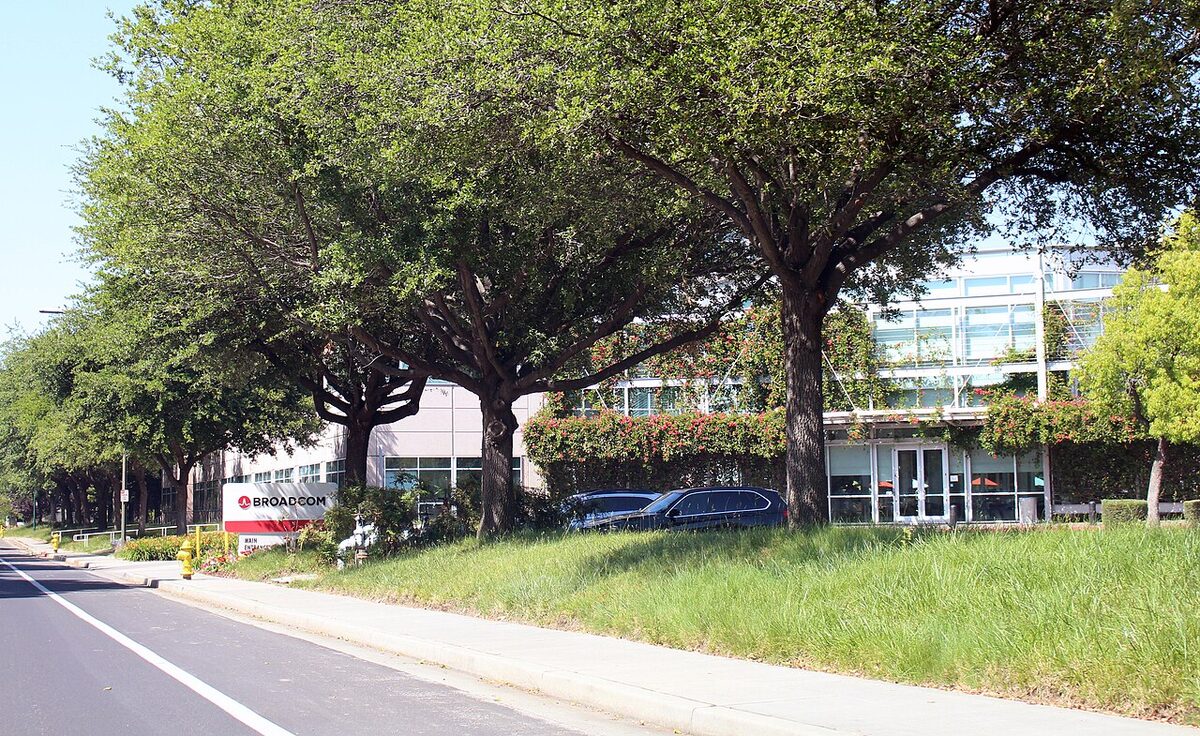
Broadcom patched a critical authentication bypass in VMware vCenter on Nov. 19. By the time the fix shipped, attackers had been using the flaw for more than two months. Google's threat intelligence team and Mandiant say a suspected China-nexus espionage group they track as ARMORY CASTLE (formerly UNC5221) has exploited the bug, CVE-2026-123890, since at least early September 2026. In at least one intrusion the group got in through a separate BeyondTrust zero-day, moved on to the virtualization layer and took the victim's Active Directory database, which Google says the group likely exfiltrated.
The Cybersecurity and Infrastructure Security Agency (CISA) added the vCenter flaw to its Known Exploited Vulnerabilities (KEV) catalog on Nov. 20 and gave federal civilian agencies until Nov. 23 to fix it. That is a three-day window. If you run vCenter and haven't patched yet, this is the week to do it.
The bug: a session key handed to anyone who asks
vCenter is the management server for VMware vSphere environments. It controls the ESXi hosts, the virtual machines running on them, and the single sign-on system that admins use to log in. Whoever controls vCenter effectively controls the data center.
According to the National Vulnerability Database (NVD), CVE-2026-123890 is an authentication bypass in the VMware Directory Service, a component tied to vCenter's identity and single sign-on functions. It carries a CVSS 3.1 score of 9.8 (Critical). The vector string tells you why: the bug is reachable over the network, takes little skill to trigger, and needs no credentials and no user interaction. CISA classifies it as CWE-288, "authentication bypass using an alternate path or channel."
Google's write-up gives a more specific description: an unauthenticated SRP-6a session key disclosure over DCE/RPC. In plain terms, SRP-6a (Secure Remote Password) is a protocol two parties use to prove they know a password and agree on a shared secret session key, without the password itself crossing the wire. DCE/RPC is an old remote procedure call mechanism that services use to talk to each other. Google says successful exploitation gives the attacker an authenticated session as the vCenter administrator, which defeats the point of the authentication exchange.
CISA's own scoring (SSVC) in the NVD record lists exploitation as active, says the attack is automatable, and rates the technical impact total.
How ARMORY CASTLE used it
Mandiant's account, summarized by Help Net Security, describes a chained intrusion rather than a single hit on an exposed vCenter.
- Initial access through BeyondTrust. The attackers first compromised a BeyondTrust Remote Support appliance. In an Oct. 15 post, Google covered ARMORY CASTLE's exploitation of a BeyondTrust zero-day, CVE-2026-102764, which BeyondTrust patched in advisory BT26-05. CISA lists that bug as an "authentication bypass by spoofing." It added the flaw to KEV on Oct. 16 with an Oct. 19 due date.
- Moving through blind spots. From the BeyondTrust appliance, the attackers pivoted to internal Linux appliances that had no endpoint detection and response (EDR) software. Mandiant's CTO warned that espionage groups will keep exploiting zero-days and deploying malware on systems that don't support EDR.
- Custom tooling. Mandiant named a number of new tools; two matter most here. BONESAW is a Go-written exploit utility for the vCenter flaw. Its build timestamp is July 13, roughly seven weeks before the early-September exploitation Mandiant observed, though Mandiant notes Go build metadata can be modified. Google believes the tool was likely developed for broader operations. SAWSNAKE forges SAML tokens. SAML is the standard that single sign-on systems use to tell applications "this user has already authenticated." Google says forged tokens let the attacker bypass multi-factor authentication and impersonate any user.
- Down to the hypervisor and the domain. The attackers then reached an ESXi host and pulled the organization's Active Directory database, the file that holds credential material for every account in the domain, along with registry hives, from a Windows VM's disk. Google said the group likely exfiltrated the data.
Help Net Security reports that the exploitation began at least early September, more than two months before the Nov. 19 patch. The attribution to a suspected People's Republic of China-nexus actor comes from Google and Mandiant. ZeroDayFeed has not independently confirmed it.
What the advisory says, and what it leaves out
Broadcom's fix arrived in security advisory VMSA-2026-0009. The same advisory also covers four other vulnerabilities in SDDC Manager and VMware Tools for Windows. Two details stand out. First, Broadcom says there are no workarounds, so patching is the only mitigation the vendor offers. Second, according to Help Net Security, the advisory makes no mention of the in-the-wild exploitation. Admins who triage by vendor advisory alone could easily miss the urgency. The exploitation evidence comes from Google/Mandiant and CISA's KEV listing.
CISA's KEV entry says it is unknown whether ransomware campaigns have used the bug. It also flags the entry for forensic triage, meaning organizations should look for signs of compromise rather than just patch. The entry cites BOD 26-04, CISA's directive on prioritizing security updates based on risk.
What It Means for Defenders
Who is affected. Any organization running VMware vCenter Server on the 9.1.x, 9.0.x, 8.0 or 5.x lines that hasn't applied the November update. According to NVD, which points to Broadcom's KB463116, VMware Telco Cloud Platform 3.0, 4.x, 5.0.x, 5.1.x and 5.2, and Telco Cloud Infrastructure 3.0, are affected too.
Patch to these fixed versions (per NVD):
- vCenter 9.1.x: 9.1.1.0200
- vCenter 9.0.x: 9.0.2.0200
- vCenter 8.0: 8.0 Update 3m
- vCenter 5.x: 5.2.5
- Telco Cloud Platform / Telco Cloud Infrastructure: follow KB463116
Broadcom lists no workaround. If you can't patch right away, treat the vCenter appliance as potentially exposed and limit who can reach it over the network until you can.
Patch the BeyondTrust bug too. If you run BeyondTrust Remote Support, make sure the fix for CVE-2026-102764 from BT26-05 is applied. That appliance was this group's way in.
Assume compromise if you were exposed. The exploitation ran for at least two months before a patch existed, and CISA has flagged the bug for forensic triage, so patching closes the hole without telling you whether someone already used it. Mandiant recommends checking for compromise after you patch and points defenders to its VCSA Hardening and Logging Tool for the vCenter Server Appliance, which blocks network access by default, filters outbound traffic and sends logs to a SIEM. Things to look at, based on the attack chain Mandiant described:
- Single sign-on activity. SAWSNAKE forges SAML tokens to get past MFA. Review vCenter and identity-provider logs for sessions that don't match normal admin behavior, such as unexpected source hosts, odd hours, or logins with no matching MFA event.
- Appliances without EDR. The attackers moved through Linux appliances no one was monitoring. Inventory these systems and confirm their logs are being sent off-box somewhere.
- ESXi hosts. Look for unexpected access or changes on hypervisors managed by the affected vCenter.
- Active Directory. In the incident Mandiant described, the AD database was taken. If you find evidence of intrusion, plan for credential resets that include privileged and service accounts, and follow incident-response guidance for a full domain compromise.
For federal agencies and contractors. CISA's KEV due date for CVE-2026-123890 is Nov. 23, 2026. Contractors working toward CMMC, or running vSphere environments that support federal work, would be wise to treat that date as their own deadline. A compromised vCenter can undermine every control that sits on top of it.
The bigger lesson. This is another case of a suspected state-linked group chaining edge-appliance and infrastructure zero-days through systems that most security tools can't see. Remote-access appliances and virtualization management planes need the same logging, network segmentation and patch urgency as domain controllers, because in this attack chain they were the path to the domain's credential store.
