
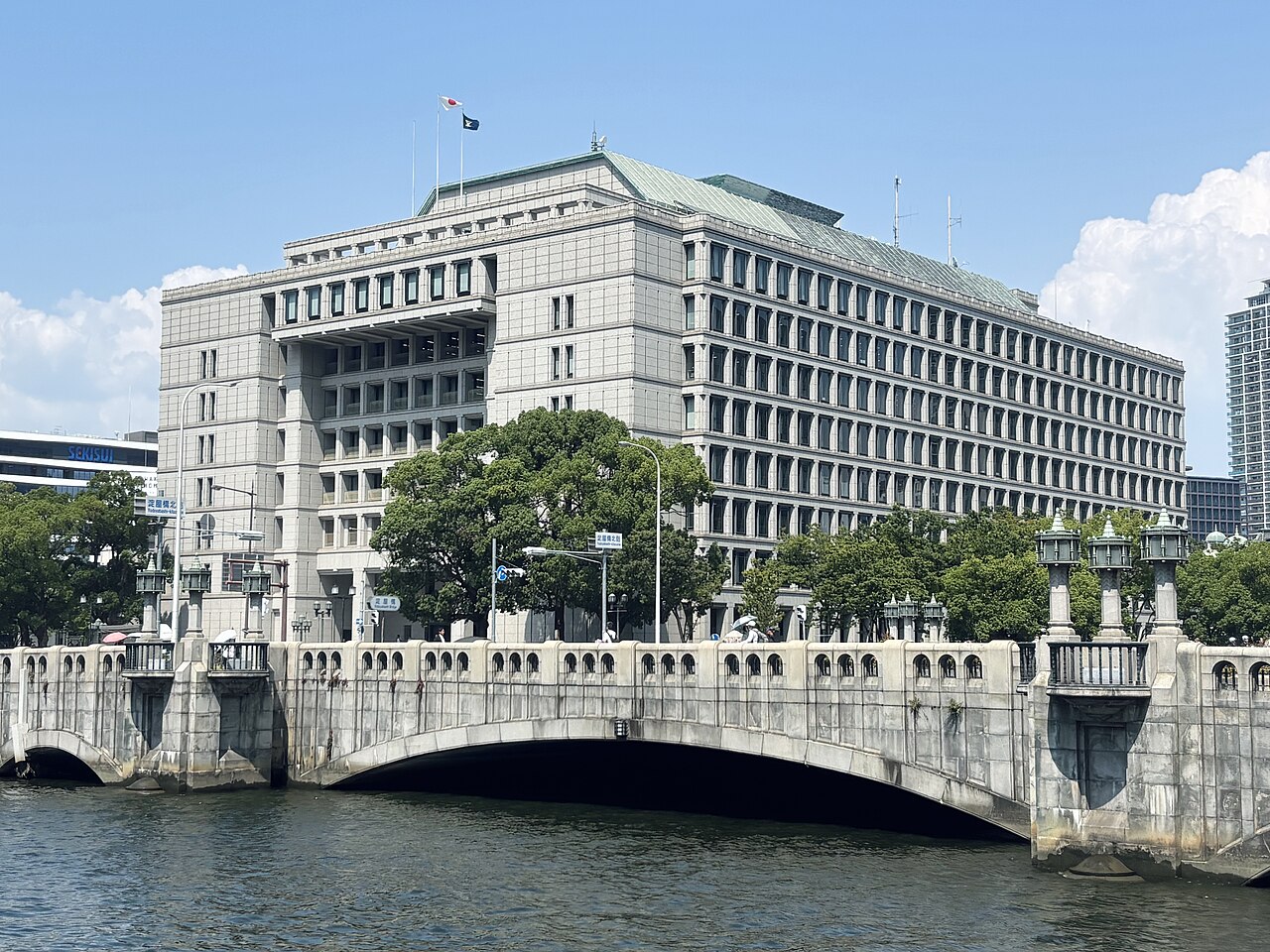
Osaka City has put a number on its share of a large email-data breach in Japan. In a notice and apology dated November 13, the city said 1,078,713 user email addresses tied to its Administrative Online System were leaked. The city did not run the system that was breached, and neither did its direct vendor. The leak happened at Arara Co., an email delivery service used by TKC, the vendor that sends the city's notification mail.
The Osaka figure is just one part of a bigger incident. Arara has said an attacker moved through 97 of its servers between October 28 and 31. Up to 77 million email addresses belonging to about 380 client organizations may be involved, and up to 7.13 million fraudulent messages went out through its systems. It is a clear example of supply-chain risk: residents who never heard of Arara, and many who had never heard of TKC either, lost data because of a provider two steps away from them.
What Osaka Says Happened
According to the city's notice, the leaked data is user email addresses. The affected group is anyone who received mail from the system's sending address, [email protected], between July 1 and October 31, 2026. The city says the number is so large because a notice email was sent in bulk to all registered users on September 16, which put far more addresses into the delivery system than a normal month would.
The city says the affected addresses were identified by TKC, which sorted and matched them using information that the delivery provider supplied. Osaka warns recipients to watch for suspicious emails, including ones that claim to come from the city or the system, and says it has asked TKC for a detailed report on the cause of the unauthorized access, the scope of the impact and measures to prevent a repeat. The city also says it will review how personal data is handled at external services.
The Vendor Chain: Osaka, TKC, Arara
The incident has three layers. Osaka's system is provided by TKC, and TKC uses Arara to deliver email. ID Tech reports that TKC says up to 2,230,812 addresses belonging to customers of its systems leaked. If Osaka's addresses are counted within that total, they would be nearly half of it. ID Tech's headline notes that the exposed systems include booking systems for My Number Card appointments. My Number is Japan's national ID card.
TKC is only one of Arara's clients. ID Tech, citing Arara's own report, gives these details:
- The attacker broke into a server and moved through others between October 28 and 31, taking database contents from 97 servers.
- Up to about 380 contracting companies (Arara's client organizations) are affected.
- About 77 million email addresses were taken or may have been. Arara says this count is still being checked and does not represent the number of people, so one person on several clients' lists may be counted more than once.
- Up to about 7.13 million fraudulent messages were sent through the service between October 28 and 30.
- For the TKC booking environment, TKC said Arara's investigation found that only email addresses were taken. Across all clients, ID Tech reports that depending on the client the data can include names, gender, birth dates, phone numbers, member numbers and street addresses. Arara says its services hold no credit card numbers.
- Arara reported the incident to Japan's Personal Information Protection Commission (PPC) and to police on October 29.
Other clients have disclosed their own numbers. ID Tech reports that Sumitomo Mitsui Banking Corporation had 227,216 addresses exposed, and that account numbers, balances and PINs were not included. The Record reports that the 77 million addresses came from nearly 400 customers, including TKC and the game company Sega.
A National Agency Was Hit Too
The breach also reached Japan's central government. In a November 4 press release, the Ministry of Internal Affairs and Communications (MIC) said its International Strategy Division contracts Arara to send the English-language newsletter "ICT x Japan - Policy Information -". The ministry says Arara told it a third party had gained unauthorized access to the mail service and that recipient information stored there leaked. For the ministry's newsletter, that was 775 email addresses and 21 names, from subscribers who entered a name when signing up. The ministry notes that credit card and phone numbers are not collected at registration, so they were not part of the leak.
The MIC release gives a stated cause: a third party exploited a vulnerability in Arara's web server, among other factors. The release does not name the software or the flaw, and none of the sources cited here does either. The ministry says Arara has blocked external access and suspended the service. Affected people are being told individually by email. The ministry says it will ask Arara for appropriate action and will work to prevent a recurrence.
None of the sources has attributed the attack to any group or country. Treat any such claim with caution until an official body or Arara confirms it.
Why "Only Email Addresses" Still Matters
It is easy to dismiss a leak of email addresses alone. That would be a mistake here, for two reasons.
The first is context. These addresses are not a random list. Each one is tied to a known relationship: this person uses Osaka's online services, banks with SMBC, or reads a ministry newsletter. An attacker who knows that could write a believable message, such as a fake city notice about a My Number Card appointment.
The second is that phishing already happened. Arara's own figure of up to about 7.13 million fraudulent messages means the attacker used the platform to send mail, not just to steal data. ID Tech and The Record report that the messages posed as credit card companies, and The Record adds financial institutions. Mail sent through a legitimate bulk provider may pass some technical checks that would flag a crude spoofed message, so recipients and filters may trust it more than they should.
Part of a Bad Month for Japan
The Record places the Osaka disclosure in a wider wave of incidents. Osaka Prefecture, a separate government from the city, announced its own breach involving food support program participants. Prime Minister Takaichi announced an emergency cybersecurity package with about $62 million in emergency funds. NTT's Mihoko Matsubara is quoted as saying October alone accounted for 58% of the incidents reported in Japan so far in 2026, and that about 380 million pieces of personal data have been stolen this year.
What It Means for Defenders
Who is affected. Anyone who received mail from Osaka's Administrative Online System between July 1 and October 31, 2026. Recipients of the MIC "ICT x Japan" newsletter. Customers of TKC-run services and of other Arara clients, including those named by the sources, such as Sumitomo Mitsui Banking and Sega. If your organization sent bulk or transactional mail through Arara, assume your recipient lists are in scope until Arara or your intermediary vendor tells you otherwise.
No patch for customers. The flaw was in Arara's own web server, and the sources name no product or fixed version. According to the MIC, Arara's mitigation so far is to block external access and suspend the service. For everyone downstream, the work is cleaning up after the leak, not patching.
Steps for organizations:
- Map your mail vendor chain. Osaka's system is provided by TKC, and the breach happened at the mail service TKC uses. Ask every vendor that sends mail for you which delivery provider it uses, and make sure your contracts require prompt breach notice from subcontractors as well.
- Warn recipients early and plainly. Osaka's guidance to watch for suspicious mail is the right message. Tell users what your real messages look like, which sending addresses you use, and that you will never ask for card details or passwords by email.
- Check your sender authentication. If a compromised provider was authorized to send as your domain, review your SPF, DKIM and DMARC records and remove that provider's authorization while it is suspended. Mail claiming to be you should not keep passing checks on infrastructure you no longer trust.
- Tune filters for the expected lures. Expect phishing that impersonates card issuers, as already seen, and messages that pose as notices from the affected organizations, such as city, bank or ID-card booking emails.
- Demand a full report. Like Osaka and the MIC, ask your vendors for the cause, the exact data fields involved and the steps they are taking to prevent a repeat. Keep a record of it for your own regulatory filings.
For individuals: treat unexpected emails that claim to come from Osaka City, your bank or a card company with suspicion, particularly anything urgent about payments or appointments. Go to the organization's website or app directly rather than clicking links, and turn on multi-factor authentication wherever it is offered.
For CMMC and federal contractors: this is a textbook case for supply-chain risk assessments. A single subcontracted delivery platform may have exposed data from about 380 organizations, including a national ministry. Notification and marketing mail vendors handle real contact data and can send in your name, so include them in your third-party inventory.
Sources
- Osaka City: notice (apology) on email address leak via unauthorized access to mail delivery service (Nov 13, 2026)
- The Record: City of Osaka warns of data breach impacting 1 million as Japan reels from dozens of cyber incidents
- ID Tech: Breach at Japanese Email Vendor Exposes Addresses From My Number Card Booking Systems
- Ministry of Internal Affairs and Communications: press release on information leak at English newsletter delivery contractor (Nov 4, 2026)
