
In September, authorities in the Netherlands and Jordan detained two people allegedly affiliated with ShinyHunters, and the group's data leak site went dark. Now organizations targeted by a crew that used to appear on that site are showing up on a new one, according to Okta. The crew still works the same way: it phones employees, pressures them into urgent password resets, and uses a phishing kit that harvests their credentials and multi-factor codes.
Okta Threat Intelligence tracks the group as O-UNC-053. In research published November 23, Okta said organizations targeted by the cluster had begun appearing on a new data leak site (DLS) branded INCEPTION, which researchers first observed on November 16. Within a week the site listed seven large companies as victims. As of The Register's reporting, none of them had confirmed a breach.
Who Inception Says It Hit
According to The Register, Inception posted its first five names on November 17 and marked each one "leaked." They were Advanced Micro Devices, Cigna Healthcare, Paychex, PepsiCo and Henry Schein. AutoZone was added on November 19 and Lucid Group on Saturday, November 21.
These are unverified claims made by Inception. The Register reported that none of the seven companies had confirmed a breach or replied to its questions. Okta says it is unable to validate whether the data published on the site is authentic. Extortion crews have strong reasons to inflate their victim lists, so a name on a leak site shows what the attackers claim and nothing more. In a May public service announcement, the FBI said ShinyHunters-style threat actors often use real or exaggerated claims of access to prompt payment, and may falsely claim to hold compromising information.
Is This Just ShinyHunters With a New Name?
Possibly. The Register notes that Okta has not formally confirmed O-UNC-053 to be the same crew as ShinyHunters, and Okta's own title calls it a "former ShinyHunters-affiliated cluster." Okta says the exact nature of the cluster's relationship with the ShinyHunters leak site is unclear, and that it cannot make a high-confidence assessment of whether O-UNC-053 runs the INCEPTION site itself or partners with another extortion actor. Okta's link is behavioral: the cluster's targets appeared on the ShinyHunters DLS, and before and after the switch it kept consistent infrastructure and tactics, leading Okta to assess that the cluster has "very likely" changed its brand affiliation.
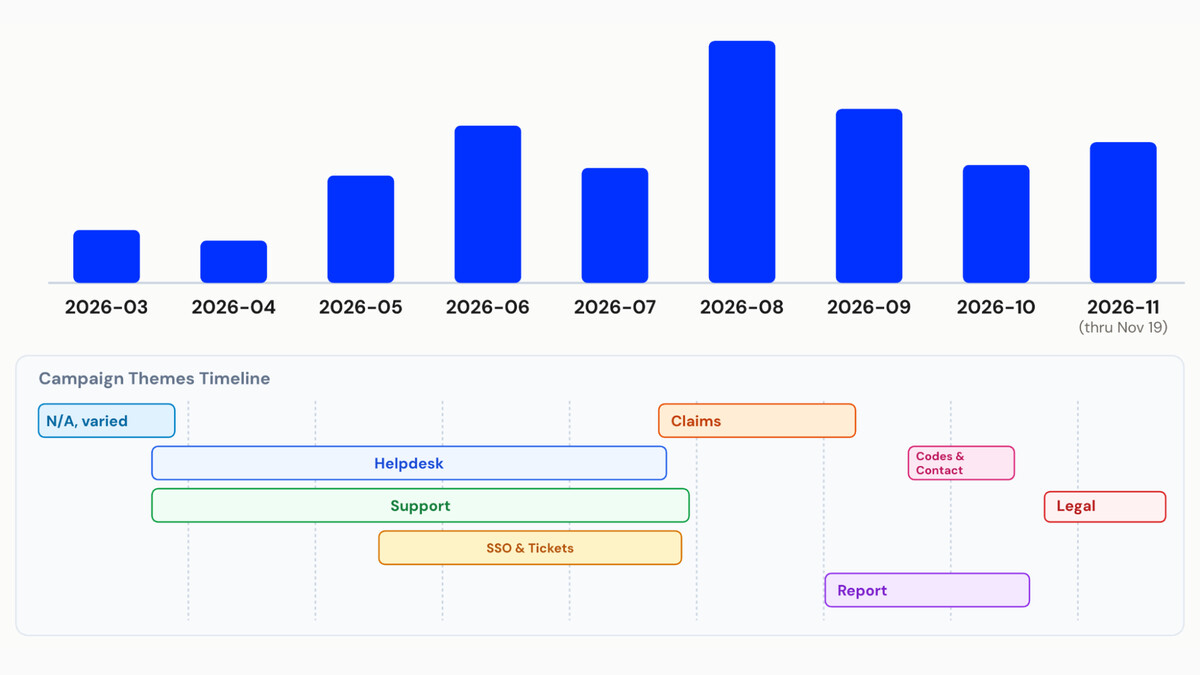
Okta says O-UNC-053 has been active since March 2026. From March to September, organizations it targeted appeared on the ShinyHunters leak site 1 to 28 days after the cluster registered phishing infrastructure. In September, law enforcement made two arrests of actors allegedly affiliated with ShinyHunters: Pepijn van der Stap on September 15, and Saif al-Din Khader, known as "Rey," on September 29. After those arrests the ShinyHunters site went down, and Okta did not see any O-UNC-053 targets published on any leak site through October and early November.
Krebs on Security reported in October that Dutch authorities arrested van der Stap, and that Reuters had reported on October 3 that Jordanian authorities detained Rey, who was cooperating with the FBI. Krebs also wrote that, according to the FBI, ShinyHunters has extorted more than $70 million from victims this year, and that the group hacked the FBI recruitment site fbijobs.gov in late September.
About seven weeks after the second arrest, INCEPTION appeared. Okta says the infrastructure behind the new victims was registered 6 to 19 days before each target was named on the site.
How the Attack Works
Okta describes a campaign built on people and on authentication methods that can be phished, not on software vulnerabilities. The pattern, in Okta's account:
- Voice phishing (vishing). Callers often impersonate support personnel and press the target to urgently reset a password.
- A phishing kit that intercepts sign-in. It first harvests the username and password, then prompts for MFA factors to steal single sign-on credentials. While on the phone, the operators talk victims into sharing one-time passcodes and approving push notifications. With access to the account, the operators reach SaaS applications and exfiltrate data, which is then used for extortion.
- Rotating domain themes. Okta says the operators change the themes of their phishing domains about every four to six weeks. The "legal" theme began in late October, with domains in forms like legal-<target> or <target>-legal. A name like that looks believable to an employee who has just been told there is a legal problem with their account. Okta says the domains are typically registered on or within one day of a campaign starting.
Okta says the kit has a clear limit. It is not capable of bypassing phishing-resistant authentication, such as Okta FastPass or FIDO2/WebAuthn passkeys. These methods tie the login to the real website's domain, so a credential created for the genuine sign-in page does not work on a look-alike. Codes and push approvals can be handed over on any page, and a phishing-resistant authenticator only responds to the real one.
What It Means for Defenders
Who is affected: Any organization whose staff sign in to single sign-on or cloud identity systems with passwords plus one-time codes or push approvals. Okta says the cluster has targeted technology, healthcare, biotechnology, financial services, insurance, entertainment, gaming, retail, transportation, hospitality and legal organizations, and the INCEPTION listings so far name large enterprises. Nothing in the method depends on a particular software version, so smaller companies and federal contractors may face the same risk. No patch fixes this. The defenses are about authentication and process.
- Move privileged and high-risk users to phishing-resistant authentication first. Okta's key prevention advice is phishing-resistant authentication such as FIDO2/WebAuthn passkeys or Okta FastPass. Start with administrators, help-desk staff, finance and anyone who can reset other users' credentials, then expand to everyone. While SMS codes, app OTPs and push approvals remain available as fallbacks, this kind of kit can still get through.
- Harden the help desk and password-reset process. The attack begins with a phone call pushing a reset. Make sure employees know how IT will and will not contact them about resets. Require identity checks for resets that do not rely on information a caller could already have.
- Watch for look-alike domains. Add your organization's name combined with "legal" to your domain-monitoring and blocklist rules, along with other themes you see. Okta says the cluster changes themes about every four to six weeks, so plan to update these rules. Okta also says the domains are registered around the time a campaign starts, so new registrations are an early warning.
- Review recent sign-ins and MFA events. Look for password resets followed soon after by new MFA enrollments, sessions from unfamiliar locations or devices, and push approvals that came right after a support call. Treat those as possible account takeovers and revoke the affected sessions.
- Brief staff using real details. Explain the scenario plainly: a confident caller, an urgent account or legal issue, and a link that looks like the company's sign-in page. A short and specific briefing helps more than general awareness training.
- If you get an extortion contact. The FBI's May 2026 public service announcement on ShinyHunters advises people not to send payment or respond to demands, to verify contacts through known channels, and to report suspected intrusions to the FBI at ic3.gov. The FBI described harassment, threatening calls and texts, swatting and extortion emails signed "ShinyHunters," and said threat actors may falsely claim to hold compromising material. That advisory was written before the September arrests and covers ShinyHunters, not Inception, but it fits this situation.
For organizations working toward CMMC, this campaign is a reminder that the type of MFA matters. A password plus a code a person can read aloud or tap to approve does not stop an attacker working in real time, which is the pattern Okta describes.
The Bigger Picture
The arrests took a leak site offline, but Okta's data suggests the underlying activity did not stop. Okta saw the cluster registering new infrastructure through October and early November, although registrations dropped significantly in September and October after an August peak and rebounded in November. Okta says the dip may reflect an impact from the arrests. Whether Inception is a rebrand, a splinter group or a partnership matters to law enforcement. For defenders it changes little, because the attack and the defense against it are the same in each case.
Sources
- Okta Threat Intelligence: Former ShinyHunters-affiliated cluster O-UNC-053 moves to new INCEPTION leak site
- The Register: Inception, possibly a ShinyHunters reboot, claims seven victims in a week
- Krebs on Security: Feds Suspect Ransom Negotiator Ran ShinyHunters Extortion Site
- FBI IC3 PSA I-051526-PSA: ShinyHunters: Cyber Criminal Group Attacks Learning Management System
