
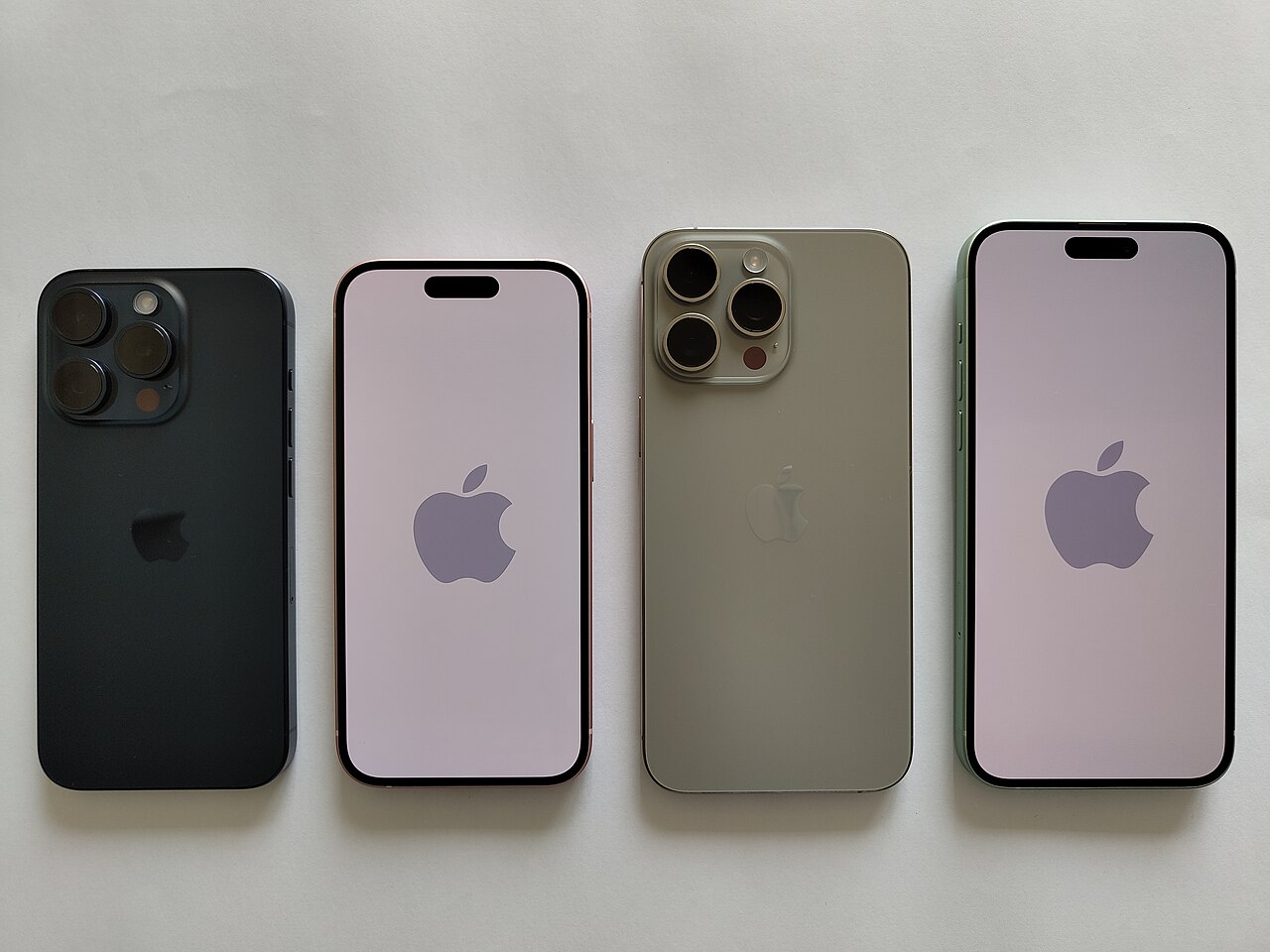
For most of the past decade, iPhone spyware was a problem for a short list of people: dissidents, journalists, diplomats and the occasional executive who had annoyed the wrong government. Mobile security vendor iVerify says that list is no longer short. Its 2026 Advanced Mobile Threat Report, released Nov. 10, describes iOS spyware that has moved down-market. Most of what the company now detects is ordinary criminals going after ordinary people's passwords and cryptocurrency.
Some context before the numbers. These are iVerify's own figures, drawn largely from consumer scans of its free online checks and from enterprise devices it monitors. The report says its prevalence figures describe the population iVerify monitors, not all iPhones. iVerify also sells mobile threat detection, so it benefits commercially from showing that the threat is widespread. Even so, the report lines up with independent reporting from The Record and CyberScoop, and the shift it describes deserves attention from anyone who manages iPhones.
The numbers
According to The Record, iVerify found 1.07 infections per 1,000 consumer scans and 0.7 per 1,000 for enterprise devices. Co-founder Rocky Cole declined to give an exact count but said hundreds of thousands of consumer devices were scanned. The Record says iVerify attributed the lower enterprise rate to enforced patching, on-device detection and network security controls. CyberScoop notes the consumer rate held relatively steady in 2026 rather than climbing. What changed was who is behind the infections.
About three in four detections were attributed to criminals focused on stealing credentials and cryptocurrency, not to state actors. A similar share, about 75 percent, involved two exploit kits called Coruna and DarkSword. The remaining quarter involved mercenary spyware such as Pegasus, which is sold to governments.
One in a thousand sounds small until you apply it to a large company. Cole told The Record that an average Fortune 500 company experiences about 65 infections per year. The Record also reports that many infected enterprise employees were rank-and-file workers, as opposed to top executives.
How government-grade tools ended up in criminal hands
An "exploit kit" is a packaged set of attacks that chains together software flaws so an attacker can break into a device, often with little or no action from the victim. According to The Record, simply visiting a compromised website can trigger a DarkSword infection, and Coruna is likewise delivered through malicious websites. Kits like these have historically been closely held tools of well-funded operators, which is the contrast iVerify draws.
iVerify says that changed in March, when DarkSword and Coruna were exposed. DarkSword then leaked on GitHub. According to the report, the result was government-grade iOS exploits in the hands of criminals, who deliver them through online advertising. That last point matters. Mass delivery through ad networks is how a once-targeted capability shows up on a limo driver's phone instead of a minister's.
The Record reports that Coruna was used by cybercriminals to steal cryptocurrency from more than 42,000 iOS devices through fake Chinese-language financial websites. That figure comes from The Record's reporting and should be read as reported, not independently confirmed by ZeroDayFeed.
The broader exploit market also made the news this year. The Record says Peter Williams, a former executive at L3Harris's Trenchant unit who pleaded guilty to stealing exploits and selling them for crypto payments, was sentenced to seven years in prison in February 2026, and it describes Coruna as directly tied to his actions. That is The Record's characterization, and we have not independently confirmed it. It does show that the supply chain for these tools can leak at more than one point.
The warning that never came
The most uncomfortable finding for iPhone owners is about Apple's threat notifications, the alerts Apple sends when it believes a user has been targeted by state-sponsored or mercenary spyware. CyberScoop reports that iVerify saw no device infected by the Coruna or DarkSword kits whose owner received an Apple threat notification. CyberScoop says this suggests Apple may be overly focused on nation-state threats and well-known commercial mercenary spyware.
Apple's notifications are reaching people outside the usual high-profile pool, though. Quoting iVerify's report, CyberScoop describes alerts reaching the children of a city bus driver and of a stay-at-home mom in Ottawa, and a limousine driver in Australia. So the notification system covers more people than conventional guidance assumed, but by iVerify's account it is not catching the criminal kit infections that make up most of what the company sees.
Cole summed up the shift to CyberScoop: the vast majority of detections were mass attacks by criminal groups, and for stealing and selling credentials, an executive credential is not necessarily more valuable than one belonging to a system administrator or an average employee.
Why this is an industry story, not just a threat story
The report points to a change in business model as much as a change in technique. Mercenary spyware vendors made money by selling access to a few buyers at high prices. When kits leak, the economics flip. The capability costs criminals almost nothing, and they can make money on volume: many drained wallets and harvested logins rather than a few high-value intelligence targets.
That has consequences for how organizations staff and budget mobile security. Many enterprises have treated iPhone compromise as an executive-protection issue, handled with special devices for the C-suite and a call to a forensics firm when something seems wrong. If iVerify's data holds up, infections at a large company are mostly hitting regular staff who carry corporate email, SSO sessions and MFA apps on their phones.
What It Means for Defenders
Who is affected: According to iVerify, iPhone users broadly, not just high-risk individuals. Consumer devices showed a higher infection rate (1.07 per 1,000 scans) than enterprise devices (0.7 per 1,000), and many enterprise cases were on ordinary employees' phones. People who hold cryptocurrency or browse finance sites, especially ones reached through ads, match the profile of the Coruna campaign The Record describes.
Don't treat Apple's notification as your only alarm. By iVerify's account, devices infected by the Coruna and DarkSword kits got no Apple threat notification. Not having received an alert says nothing either way about these criminal kits. Organizations that want visibility into iPhone compromise need their own detection or a forensic check, not just Apple's alerts.
Assume credentials on a compromised phone are gone. The kits' main purpose, per the sources, is stealing credentials and cryptocurrency. If a device is confirmed or strongly suspected to be infected, rotate passwords and revoke sessions and tokens for the accounts used on it, including corporate SSO and email. Move any cryptocurrency held in wallets on that device to new wallets created on a clean device.
Patch and reduce exposure. The sources do not list specific iOS versions that fix the flaws Coruna and DarkSword use, so we can't name a fixed build. The sensible baseline still applies: keep managed iPhones on the current iOS release, enforce updates through MDM where possible, and treat ad-delivered web content as an attack surface. Delivery through online ads is the infection path iVerify describes.
Plan for scale. Cole's figure of about 65 infections a year at an average Fortune 500 company is a vendor estimate, not an audit. Still, it's a useful planning figure. If your incident response plan for mobile compromise assumes one or two cases a year involving executives, test it against dozens involving front-line staff.
Read the numbers with care. iVerify's prevalence figures come from its own monitored population and free consumer scans. Organizations and people who choose iVerify-type tools may already be more risk-aware than average, and the company has a commercial interest in the result. Use the report as a direction-of-travel signal, not a precise base rate for your fleet.
