
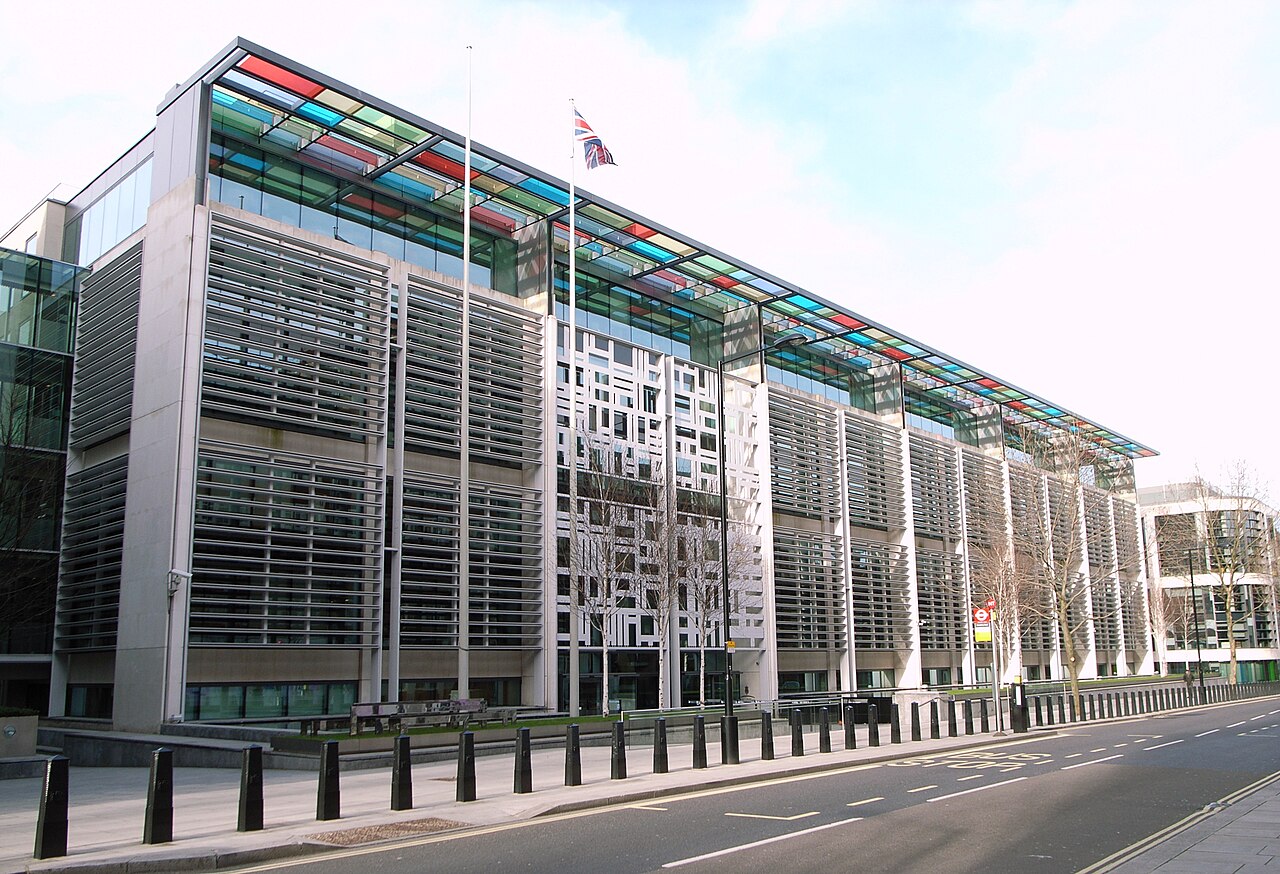
When a border officer checks your passport against a watchlist, the system is effectively deciding whether you get waved through or taken aside. If the record behind that decision is wrong, there has to be a quick way to fix it. According to the UK's data protection regulator, the Home Office switched on its new border watchlist system, Helios, without one.
The UK's data protection regulator, the Information Commission (which took over the powers of the Information Commissioner's Office on September 30, 2026, and is still commonly called the ICO), has published a formal reprimand addressed to the Secretary of State for the Home Department. The document is dated November 4, 2026, and press coverage followed on November 26. It finds that the department ran Helios without an adequate process for reporting and correcting inaccurate personal data, and that it never built accuracy safeguards into the system's design. The ICO warned that inaccuracies could lead to people being wrongly held for additional checks or refused entry to the country.
Reprimands rarely make security headlines. This one is worth reading closely, because the underlying failure is an architecture problem that many IT teams will recognise.
What Helios Replaced, and What Went Missing
Helios replaced an older system called the Warnings Index. The Register reports that the Warnings Index had a dedicated team that corrected entries in real time. If an officer at the border found a bad record, someone could fix it.
Helios works differently. It uses a federated model, meaning the data sources are not centrally managed. In that setup, Helios operators could not change the records they were looking at. Staff were meant to report inaccuracies to the owner of the source data, who would make the correction, but no reporting system existed when Helios launched.
It made things worse that, according to Infosecurity Magazine, staff were told not to include personal data in their reports. That instruction makes sense in isolation, since nobody wants personal details spreading through incident tickets. But the ICO said it made it "virtually impossible" to provide the information needed to correct a record.
A Timeline of the Failure
- October 2, 2024: Helios goes live.
- Nine days later: The Home Office's own data protection officer (DPO) has to submit a breach report after operational staff said they did not know how to request data corrections, according to The Register.
- During the same early period: Helios operators send 87 rectification requests to the Warnings Index correction team, which has no capability to make the changes, The Register reports.
- October 25, 2025: More than a year after launch, a temporary reporting system is introduced, per Infosecurity Magazine.
- By March 2026: Border officers have raised about 6,500 incidents through that system, and about 5,000 incorrect records have been removed.
- September 24, 2026: The ICO issues a Notice of Intent, its formal warning that it plans to issue a reprimand.
- November 4, 2026: The reprimand is issued.
The figure of roughly 5,000 removed records is the clearest measure of the problem. These were incorrect entries in a system used to make decisions at the border. It took more than a year for even a temporary reporting route to arrive.
Why Officials Launched Anyway
According to The Register, officials went live knowing no reporting system was in place, because they judged the data integrity and security risks of the Warnings Index to be greater than those of Helios.
That kind of trade-off is common in legacy replacement projects. The old platform is fragile, the new one is "good enough," and the missing pieces are expected to follow shortly. The ICO's finding is that the missing piece here was not optional. Once accurate data is a legal duty, a way to correct it is part of the minimum system you need before go-live.
What the ICO Actually Found
The reprimand was issued under Article 58(2)(b) of the UK GDPR, which lets the regulator formally reprimand an organisation whose processing has infringed data protection law. It was signed by Joanne Stones, acting under delegated authority. The ICO identified two infringements, each under both the UK GDPR and the matching provision of the Data Protection Act 2018:
- Accuracy: UK GDPR Article 5(1)(d) and DPA 2018 section 38(1). Organisations must keep personal data accurate and take every reasonable step to correct or erase inaccurate data without delay. The ICO found the Home Office ran Helios without an appropriate process for promptly reporting inaccurate data and having it corrected or erased.
- Data protection by design: UK GDPR Article 25(1) and DPA 2018 section 56(1). Organisations must build appropriate safeguards into systems from the design stage onward, not add them later. The ICO found the Home Office failed to implement appropriate measures and integrate the necessary safeguards for accuracy into Helios.
A reprimand is a public, on-the-record finding that the law was infringed. It is not a fine. The real cost is reputational, along with the scrutiny that follows.
What It Means for Defenders
There is no CVE here, no patch and no vendor advisory. The sources do not describe a software vulnerability or an attacker. This is a data integrity failure, and integrity is the "I" in the confidentiality, integrity and availability triad that security teams are supposed to protect. The lessons below are our own reading of what the reprimand and the reporting describe.
Who should pay attention: anyone building or running a system that aggregates records it doesn't own. That covers identity and access platforms fed by HR systems, SIEMs and threat intelligence platforms that pull in third-party indicators, customer data platforms, and any "single pane of glass" dashboard built on federated sources. Federal contractors and others handling regulated data should apply the same thinking to any system where a bad record can deny someone access or trigger an enforcement action.
What to check:
- Is there a correction path that actually ends somewhere? If your system shows data it cannot edit, write down exactly who can fix each upstream source and how a report reaches them. At Helios, operators sent correction requests to a team that had no capability to act on them.
- Can people report a specific bad record? Rules that keep personal data out of tickets are sensible. Without a safe alternative, such as a record ID, a reference token or a restricted reporting channel, they make errors close to impossible to report. Design the two together. The Home Office's temporary fix used unique reference numbers to identify cases.
- Is correction a go-live requirement? If launch criteria include availability and access control but not data rectification, the Helios scenario can repeat. Treat "we can fix wrong records" as a launch blocker, not a later phase.
- Do you measure error volume? The scale only became visible once a reporting system existed: about 6,500 incidents and about 5,000 records removed. If you have no way to count errors, you can't know how many you have.
- Are your risk acceptances documented and revisited? Officials consciously accepted Helios's risks over the Warnings Index's. Accepting a risk can be legitimate. Leaving it in place for over a year without a working mitigation is what the regulator found to be an infringement.
- Do you act on your DPO's early warnings? A breach report filed nine days after launch was a clear early signal. Make sure privacy and security escalations at go-live lead to someone owning a fix and setting a deadline.
The broader point is that accuracy is a control, not just good housekeeping. A system that cannot correct its own mistakes ends up acting on them, and when that system sits at a border, a firewall or a login screen, real people bear the consequences.
