
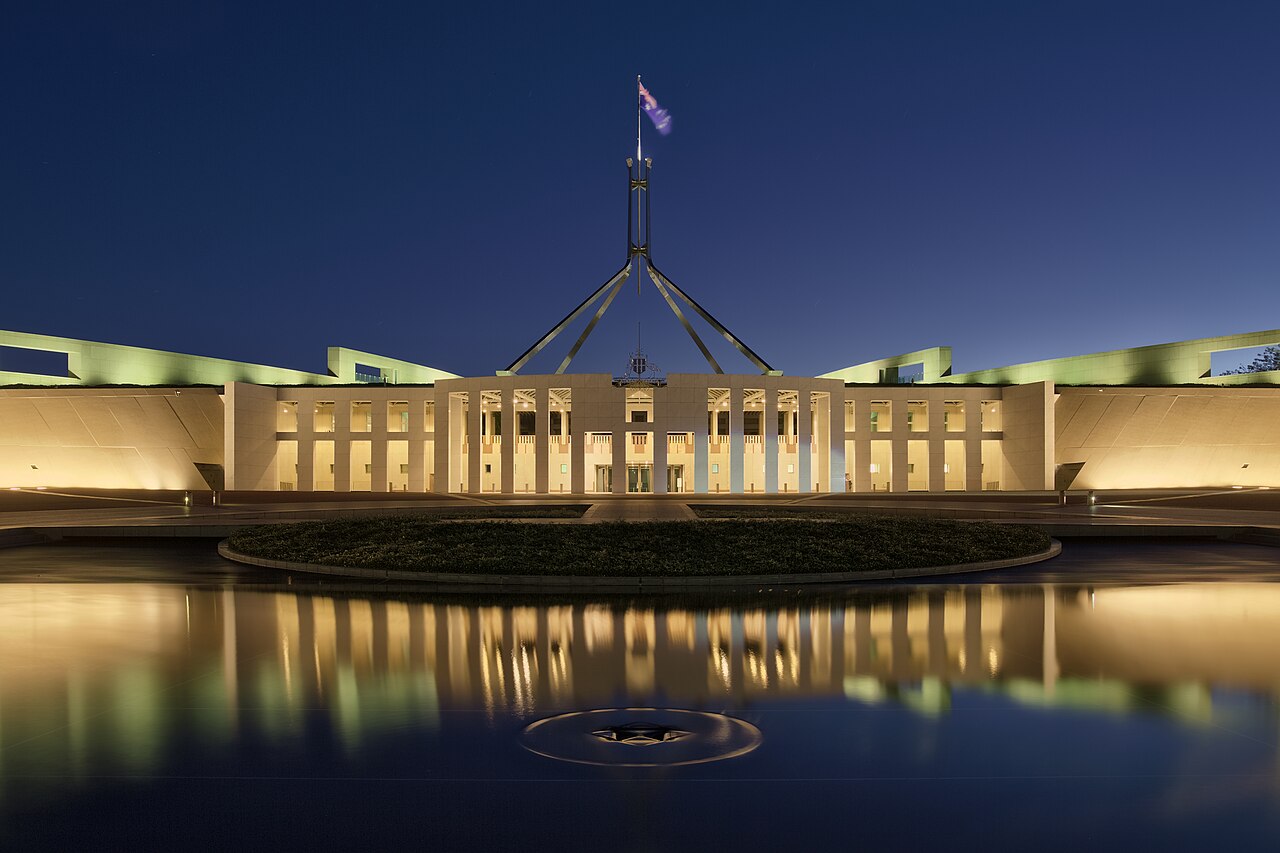
Australia has changed the basic question its online safety law asks. Until now, regulators mostly asked whether a platform took harmful content down quickly enough after someone complained. The new question is whether the platform saw the harm coming and designed against it. On Wednesday, Nov. 25, Parliament passed the Online Safety Amendment (Digital Duty of Care) Bill 2026. The law requires large online services to assess and reduce "foreseeable" harms before they occur. It is backed by fines tied to global revenue and by a right of private action, which lets individuals and groups take platforms to court.
Prime Minister Anthony Albanese backed the bill strongly and, according to The Record, told Parliament it will be a "powerful instrument to protect our children and our society from online harms." Communications Minister Anika Wells called it the country's "most seismic and significant online safety reform" yet, according to Biometric Update, which was quoting the legal news site iclg.
How the Vote Went
The Senate passed the bill 36 to 23 with Labor and Greens votes. The opposition Coalition voted against it. The Next Web reports that the bill got through the Senate under a deal Wells struck with the Greens. Biometric Update says the Greens proposed the 5 percent maximum for fines. The bill then went back to the House of Representatives, which approved it 97 to 43 the same Wednesday. The House had first passed it 96 to 38 in October, Biometric Update reported.
Albanese made the government's case in the House on Oct. 27, in a speech published on pm.gov.au. He presented the bill as the next step after Australia's 2024 minimum age law for social media. He said five million underage social media accounts had been deactivated, removed or restricted under that earlier law.
What a "Duty of Care" Actually Requires
"Duty of care" is a legal idea borrowed from negligence law. If you are in a position to foresee that your conduct could hurt someone, you must take reasonable steps to prevent it. Applied to platforms, it moves the burden from after the fact to before it. According to The Record, covered providers must:
- Put protocols in place against threats of violence and rape and against other behavior that could cause significant harm.
- Detect and reduce risks from harmful content on their services.
- Protect users under 18 from pornography and from content on suicide and eating disorders.
- Produce a written risk assessment every year.
- Call out major platform design changes that create new harms, with endless scrolling given as an example.
- Require users to prove their age before they can access pornography.
The Next Web adds that platforms must assess the risks of addictive design features such as endless scroll and popularity meters. In his speech, Albanese said online services including social media, online games and AI chatbots must protect under-18s from harmful content, so conversational AI products appear to face the same foreseeable-harm test as social feeds. The Next Web also reports that AI chatbots will be barred from building emotional intimacy with children. Not every website is caught. Low-risk services fall outside the law, and according to The Next Web, Wells gave a cafe's or a bookkeeper's website as examples of sites unlikely to harm their users.
The Feed Switch
The provision most users will notice is what Biometric Update calls "My Feed, My Way." Australians get the right to opt out of personalized recommendations in their default social media feeds. The Next Web reports that platforms must offer the switch and keep it easy to find. For platforms whose engagement numbers depend on ranked feeds, this is a product change as much as a compliance one.
Penalties and the Right to Sue
The maximum penalty is A$109.2 million or 5 percent of global turnover, whichever is higher. For the largest platforms, the percentage figure is the one that matters. The Record notes the law opens the possibility of billions of dollars in fines. Wells said the 5 percent level sits between Canada's 3 percent and the European Union's 6 percent, according to The Next Web.
Regulator fines are only half of it. The law also creates a right of private action, meaning individuals and groups can sue a platform that breaches the duty. That opens a second enforcement route beyond the government, one that depends on plaintiffs and their lawyers rather than on a regulator's budget and priorities.
Complaints will go through several channels. Biometric Update lists the eSafety Commissioner, the courts and possibly a future ombudsman. The Next Web describes a separate external complaints body. Platforms will also have less time to deal with complaints made directly to them: 24 hours, down from 48. In his speech, Albanese described this change in terms of cyberbullying complaints. The Next Web reports a 12-month transition period before the duty takes effect.
The Pushback
The law faces opposition abroad as well as at home. The Record reports that US officials accused it of violating free speech, threatening American companies' business models and imposing vague requirements. Biometric Update reports that US Ambassador David Brat said it would disproportionately affect American companies, and that the tech lobby group DIGI called the process rushed and the law too vague. The Coalition voted against the bill in the Senate.
Australia is not acting alone. The Record notes that the UK and EU already have similar laws, while a duty-of-care bill introduced by US lawmakers has stagnated in Congress. A company running a global platform now faces risk-assessment and design-review duties in several major markets, so it may find it simpler to build one process that satisfies all of them than to run a separate version for Australia.
What It Means for Defenders
This is a policy story, not a vulnerability story. There is nothing to patch and no fixed version. But the law creates real work for security, trust-and-safety and compliance teams at any organization that runs a user-facing platform, community or AI chatbot available in Australia.
Who is affected. Online service providers with real exposure to user harm, including social platforms and AI chatbot operators. Low-risk services, such as a cafe's website, fall outside the law according to The Next Web. If you run user-generated content, messaging, recommendation feeds or a public-facing chatbot, assume you need to check whether you are in scope. Per The Next Web, there is a 12-month transition before the duty takes effect.
What to check.
- Risk assessment process. The law requires a written risk assessment every year. If your threat modeling covers only security threats (account takeover, data leakage), widen it to cover the harms the law names: threats of violence and rape, other significantly harmful behavior, and minors' exposure to pornography, suicide and eating-disorder content.
- Change management. Major design changes such as endless scrolling must be called out. Add a harm-review gate to your product release process so that feed, recommendation and engagement changes are documented before they ship.
- Complaint handling SLAs. The response window for complaints made directly to platforms drops from 48 to 24 hours. Check your on-call coverage, ticket routing and escalation paths against the new deadline, including weekends.
- Feed opt-out. Users must have an easy-to-find switch to turn off personalized recommendations. Engineering teams should confirm that a non-personalized feed path exists and works.
- Age assurance. Pornography access requires proof of age. Any age-verification flow collects sensitive personal data, so treat it as a high-value target. Minimize what you keep, encrypt what you must store, and scope access tightly.
- AI chatbots. Chatbots are in scope. Teams deploying conversational AI should test and document how their models respond to self-harm, eating-disorder and violent prompts, especially from users who may be under 18.
- Litigation readiness. Because individuals and groups can now sue, your risk assessments, design reviews and complaint logs may end up as evidence. Keep them accurate, dated and retained.
For multinational operators already working under the UK and EU regimes, much of this will be familiar. The task is to map Australia's specific requirements, especially the 24-hour complaint window and the feed opt-out, onto processes you already run, rather than starting from scratch.
Sources
- Australia passes tough legislation requiring big tech to preempt foreseeable harms (The Record)
- Australia passes Digital Duty of Care with fines tied to global revenue (Biometric Update)
- Australia passes online safety law letting users sue big tech (The Next Web)
- Digital duty of care, speech by Prime Minister Anthony Albanese (pm.gov.au)
