
Four weeks after an overnight attack shut down refrigeration at hundreds of French supermarkets, Paris has named who it believes did it. On Nov. 9, France's Ministry for Europe and Foreign Affairs formally attributed the Oct. 11-12 attack to Shahid Kaveh, a unit the ministry says is affiliated with the electronic and cyber centre of Iran's Islamic Revolutionary Guard Corps (IRGC). The ministry called the attack the "first cyber offensive campaign carried out purely for sabotage on national territory."
The diplomatic statement came alongside a criminal case, a joint report from France's cyber crisis coordination centre, and a promise to propose European sanctions. Below is what France says happened, what it plans to do, and what the attribution does and does not cover. As with any government attribution, the findings are France's own conclusions, and Iran has not publicly responded, according to The Record.
What happened on the night of Oct. 11-12?
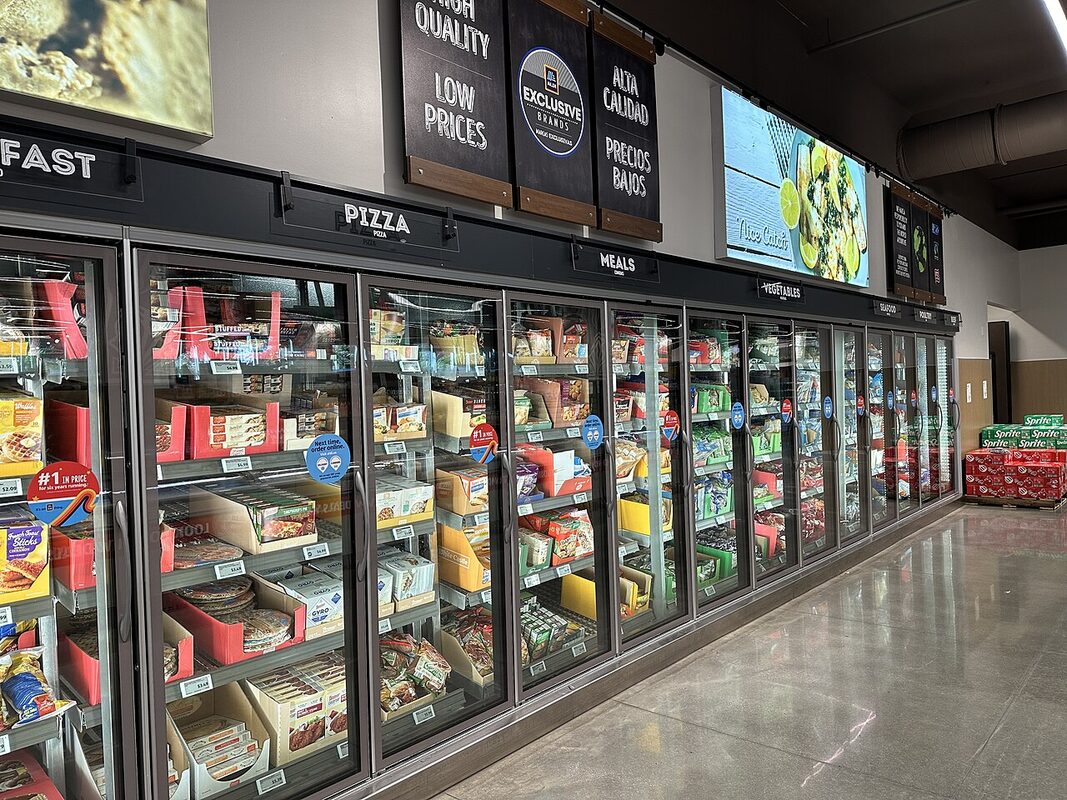
The foreign ministry says the attackers went after refrigeration controllers deployed at more than 700 retail sites in France. These controllers are small industrial computers that keep cold rooms, freezers and display cases at the right temperature. According to the ministry, the attack caused "considerable material damage," including fires, and food losses it estimates at several tens of millions of euros.
The Record reports that around 700 grocery stores were affected and that there were at least 15 fires. It adds that victims included large chains as well as smaller businesses such as butchers, a slaughterhouse and cooperative food-processing plants. The Register lists the affected chains as Casino, Leclerc, Coopérative U, Metro, Carrefour and Intermarché, and also cites 15 fires and food losses in the tens of millions of euros.
The CERT-FR threat report CERTFR-2026-CTI-009, published Nov. 9, describes the attack on industrial refrigeration controllers as unprecedented in scale and aggressiveness.
Who does France say is responsible?
The attribution comes from the C4, France's cyber crisis coordination centre. According to CERT-FR, it brings together ANSSI (the national cybersecurity agency), COMCYBER (the military cyber command), the DGA (the defence procurement agency), the DGSE and the DGSI (the foreign and domestic intelligence services). CERT-FR says the C4 members attribute several destabilisation attacks against French interests to two cyber-offensive units operating within the IRGC's electronic and cyber centre: Shahid Shoostari and Shahid Kaveh. The foreign ministry names Shahid Kaveh as the unit behind the refrigeration attack.
The foreign ministry says Iran has already carried out destabilising acts against France, including against the magazine Charlie Hebdo in 2023 and around the organisation of the Paris Olympics in 2024. The ministry says the refrigeration attacks run contrary to the UN framework of responsible state behaviour in cyberspace. According to The Record, the report attributes those earlier incidents to the other unit, Shahid Shoostari.
Shahid Kaveh is known outside France as well. The Record reports that the unit was previously linked to attacks on industrial controllers at US water utilities, and says US agencies earlier this year identified Shahid Kaveh as another name for the CyberAv3ngers group. The Register describes the unit as the same crew suspected of involvement in July attacks on more than 100 internet-exposed US water systems, and notes that the US government has not attributed those intrusions to any country or group; private-sector analysts blamed Iran.
The Record says the C4's public report runs five pages. It also reports that ANSSI saw Iranian actors simultaneously targeting Schneider Electric equipment at several small hydroelectric facilities, with disruption described as moderate. According to The Register, the report points to shared infrastructure used for reconnaissance on Schneider Electric equipment, techniques known to be used by Shahid Kaveh since at least April 2026, and traces of Farsi in the attack infrastructure.
What is France doing about it?
France is responding through diplomatic, legal and economic channels at the same time.
- Criminal case. The Record reports that the Paris Prosecutor's Office opened a judicial investigation targeting the head of the unit, two of its deputies and other suspects yet to be identified, and that prosecutor Laure Beccuau requested international arrest warrants.
- Sanctions. Foreign Minister Jean-Noël Barrot, speaking at a G7 ministerial meeting in Paris, said France will pursue European sanctions, according to The Record. The ministry statement says France will propose new sanctions to its European partners against Iranian entities and individuals.
- Diplomatic protest. The Record reports that France has summoned Iran's ambassador; the ministry statement says it will do so.
- Broader warning. The ministry says France is resolved to use all means of response available to it and reserves the right to take further public and non-public measures. The Register quotes the phrase "all available means of response."
Arrest warrants against intelligence officers in Tehran are unlikely to lead to a courtroom anytime soon. Their likely value is in restricting where those individuals can travel and in putting the evidence on the record. EU sanctions, if member states agree to them, would add financial penalties.
What isn't covered yet?
This attribution covers the Oct. 11-12 French campaign. According to The Record, a second wave of attacks on refrigeration systems in early November hit businesses in at least 11 European countries, and the ANSSI report does not address it. The sources we read do not report any government attribution of that second wave, so readers should not assume the same actor is behind it until an investigating government says so.
Why this matters beyond France
Many state-linked attacks on operational technology (OT) that make the news involve water, power or pipelines. This campaign hit grocery chains, which are not usually discussed as critical infrastructure. It turned building equipment into a source of physical damage, both fires and spoiled stock. The reported targeting of small hydro sites and the earlier attacks on US water utilities suggest an actor interested in industrial controllers across more than one sector, though that is our reading rather than a finding in the sources.
What It Means for Defenders
The public sources we read do not name the refrigeration controller vendor or model, and they list no CVEs or fixed firmware versions. There is nothing specific to patch on the basis of this announcement. The practical steps are about finding equipment that can be reached from the internet and reducing that exposure.
- Who is affected: Retailers, food distributors, cold-storage operators and facilities teams that run remotely managed refrigeration controllers. The same applies to small utilities and hydroelectric operators. The Record reports that Schneider Electric equipment at small hydro sites was targeted, and The Register describes the same crew as suspected in attacks on internet-exposed US water systems.
- Read the French report: The CERT-FR CTI-009 report page links to the full C4 report. Start there for the indicators and recommendations France has published.
- Inventory remote access: List every HVAC, refrigeration and building-management controller across your sites. Record how each one is reached remotely: directly from the internet, through a vendor's cloud portal, or through a maintenance contractor's connection.
- Remove direct internet exposure: Controllers reachable from the open internet are an obvious risk, and the US water systems in the July attacks were internet-exposed. Put management interfaces behind a VPN or a gateway that the operator controls.
- Rotate credentials: Change default or shared passwords on controllers and their remote-management portals, including accounts held by service contractors.
- Plan for physical failure: Because the attack caused fires and spoiled stock, cyber incident plans for cold-chain sites should include temperature alarms that do not depend on the controller, a manual way to override it, and fire response.
- Watch for the second wave: European operators should follow national CERT advisories on the early-November activity. The ANSSI report does not cover it.
Sources
- French Ministry for Europe and Foreign Affairs: Declaration attributing cyberattacks on France to Iran (Nov. 9, 2026)
- CERT-FR CERTFR-2026-CTI-009: Offensive cyber activity targeting France by IRGC-linked Iranian actors (Nov. 9, 2026)
- The Record: France blames Iran for fridge cyberattacks, says some caused fires (Nov. 9, 2026)
- The Register: France blames Iran for supermarket hack meltdowns (Nov. 9, 2026)
