
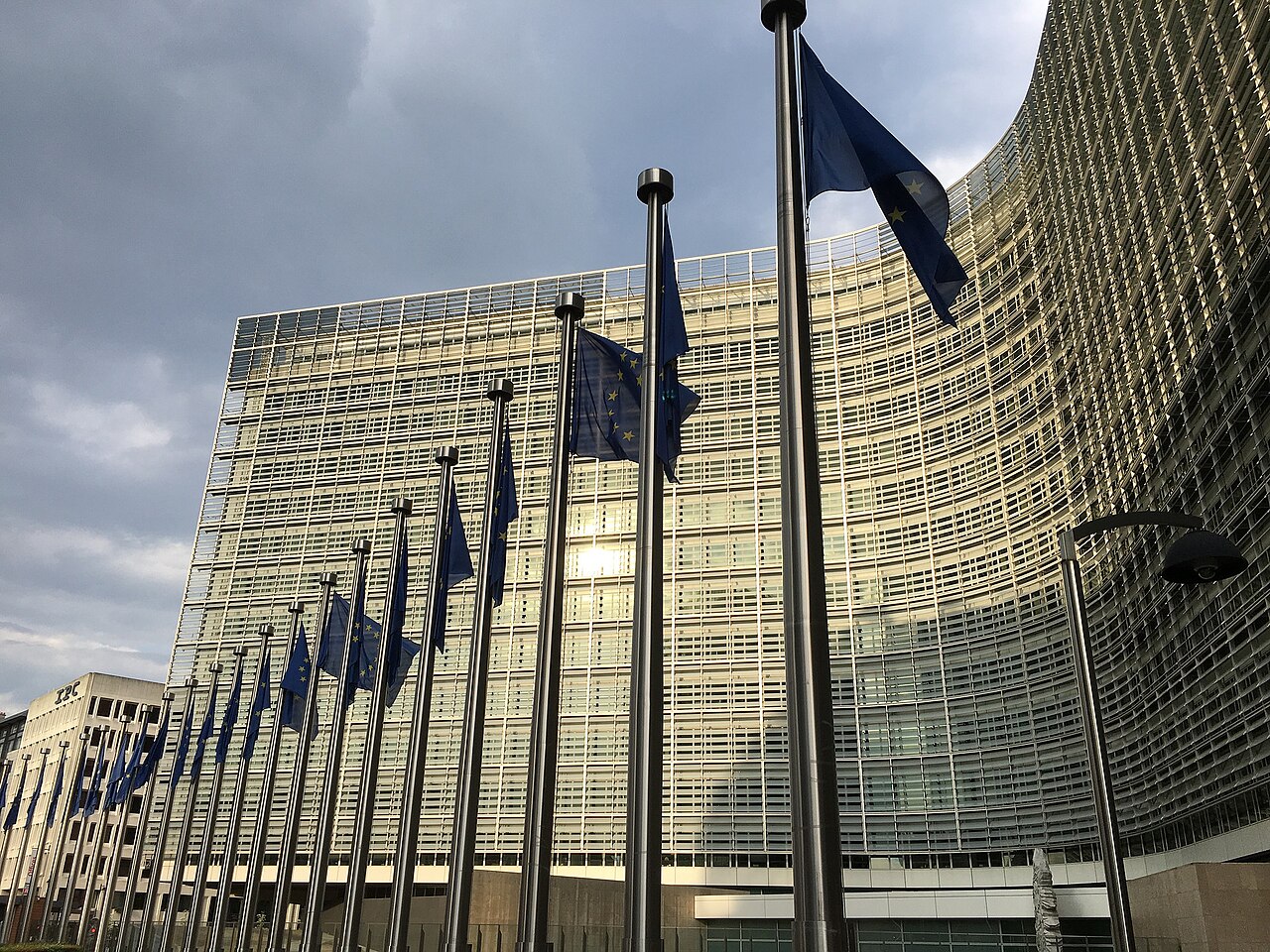
For more than a week, staff at the European Commission couldn't reach the system that handles their payslips, timesheets and leave requests. The system for claiming medical reimbursements was down too. On Nov. 19 the Commission said why. Spokesperson Thomas Regnier told the midday press briefing in Brussels that "this was an AI generated cyber campaign," and he called it "a misuse of an AI tool" that is publicly available.
This is one of the clearest public statements so far from a major government body that an AI-driven intrusion campaign disrupted its own operations. A lot about it is still unknown. The Commission hasn't said who was behind it, hasn't named the tool, and won't describe how it responded. Below is what has been confirmed, what has only been reported, and what defenders can take from it.
What did the Commission actually confirm?
The Commission's audiovisual service lists the topic on its agenda for the Nov. 19 briefing as "Cyber campaign against the European Commission: Q&A." According to Help Net Security's account of the briefing, Regnier made these points:
- Timeline: The activity was detected on Oct. 22 and confirmed on Oct. 26.
- Impact: Several applications were taken offline for a while as a protective and preventive measure. Most have since been restored.
- Method: The campaign was AI-generated, using a publicly available AI tool that had been misused. Regnier told the Brussels Times: "we can confirm that this was done with AI tools."
- Data: "We have not detected any evidence of a data breach affecting Commission staff as a whole."
- Extortion: Regnier said he was not aware of any ransomware request made to the Commission.
- Coordination: The Commission is in close contact with CERT-EU, the computer emergency response team for EU institutions, and with the European Data Protection Supervisor (EDPS), the EU's data-protection regulator for its own bodies.
Regnier would not attribute the campaign to any actor. He also declined to give details of the countermeasures, according to the Brussels Times.
The data statement is narrower than it may sound. "No evidence of a data breach affecting Commission staff as a whole" rules out a breach of everyone's records. It does not rule out access to some records. The Commission hasn't said more, and readers shouldn't read it as a blanket all-clear.
Which systems went down?
Politico broke the story. The Register reported that the disruption lasted more than 10 days and hit two internal systems that staff depend on:
- Sysper, the human-resources system for payslips, timesheets and leave.
- MyPMO, the system for medical reimbursements.
Translation services were affected as well, according to The Register. Both systems were brought back online earlier in the week, but Sysper failed again on Wednesday, so recovery has not gone smoothly. Not everything went down: the Brussels Times reported that external services such as Outlook reportedly continued to function.
The Register also reported that the Commission's Corporate Management Board held an emergency meeting, and that Henna Virkkunen briefed commissioners on the incident. The Commission has not said whether the attackers obtained employee data or whether the applications were simply taken offline as a precaution.
What is ARTEX, and is it confirmed?
The Commission hasn't publicly named the tool. Two reports point to the same one. Politico's sources, as relayed by The Register, said the Commission's defenders detected ARTEX. An EU official told Politico that CERT-EU identified ARTEX, according to the Brussels Times. So the link to ARTEX comes from sources speaking to the press, not from an official Commission statement.
CERT-EU had already warned about this tool. On Nov. 5, two weeks after the Commission says it first spotted the activity, the team published a post titled "From Penetration Testing to Cyber Threat: Beware of ARTEX." It describes ARTEX as an open-source, LLM-driven autonomous penetration-testing platform. Penetration testing means attacking your own systems with permission to find weaknesses. CERT-EU says ARTEX takes a security objective in natural language and has one or more agent workers carry out reconnaissance and testing steps autonomously, under a human operator's oversight, where a human tester would normally do that work by hand.
CERT-EU said it had seen several threat actors around the world using ARTEX to automate their campaigns, plus similar AI-driven activity against its own constituency that it assessed as highly likely to involve ARTEX. The post doesn't mention the Commission incident. It's still a useful public signal that the team was tracking ARTEX at the time. CERT-EU also said the original author made the repository unavailable in October 2026 after reports of misuse, and that the public versions are now independent forks.
The problem isn't limited to Europe. According to The Register, the FBI has flagged more than 1,600 exposed ARTEX consoles. These are control interfaces for the tool that can be reached over the internet. That number shows how widely the framework has spread.
Why "publicly available" is the important detail
Regnier's wording matters. He didn't describe a custom tool built by an elite team. He described the misuse of a publicly available AI tool. Dual-use security tools have always worked this way: frameworks built for red teams end up with criminals and spies. What's different now is that the AI does much of the work. CERT-EU assesses that ARTEX's public availability will likely accelerate adoption by threat actors, resulting in more frequent, faster and more scalable automated attacks.
None of the sources say how the attackers got in or what they did once inside. Any claim that AI "made" this attack successful goes beyond what has been disclosed. What is confirmed is the outcome: internal HR and related services at the Commission were disrupted for more than 10 days, according to The Register, and in at least one case they failed again after being restored.
What It Means for Defenders
Who should pay attention: any organisation with services facing the internet, and especially public-sector bodies, EU institutions and their suppliers. CERT-EU says ARTEX has been used by several threat actors worldwide, so this isn't only an EU problem. Organisations that work with government customers may want to factor autonomous attack tooling into their risk assessments.
What to do, based on CERT-EU's ARTEX advisory:
- Limit internet exposure and patch exposed assets first. CERT-EU's immediate steps are to identify internet-exposed assets, keep only those that need exposure, isolate management and control panels from the internet, and prioritise emergency patching of exposed assets.
- Implement multi-factor authentication (MFA) across all critical systems and services to protect against account takeover.
- Put a web application firewall (WAF) or equivalent in front of internet-exposed assets.
- Deploy endpoint detection and response (EDR) to monitor and block processes showing unusual behaviour, such as privilege escalation attempts, so that activity after a break-in is visible on hosts, not only at the network edge.
- Hunt for ARTEX artefacts. CERT-EU recommends searching your logging for artefacts and behaviours consistent with ARTEX usage, such as automated scanning patterns, rather than waiting for an alert.
- Keep detection and logging in good order on internet-facing assets. If your exposed systems don't record activity, you can't tell when an intrusion started or what it touched. The Commission's own timeline ran four days from detection to confirmation.
- Keep minor findings in the remediation cycle. CERT-EU warns that AI-enabled tooling can chain minor misconfigurations into higher-impact attack paths.
Also check: whether your own organisation is running penetration-testing frameworks with consoles exposed to the internet. The FBI's count of more than 1,600 exposed ARTEX consoles, reported by The Register, suggests many installations are reachable by anyone who goes looking. CERT-EU advises keeping management and control panels isolated from the internet.
For business continuity: the outage hit HR and medical-reimbursement systems. These are internal back-office tools that rarely get top priority in incident planning. Make sure you have manual fallbacks for HR and payroll, and plan for a restored system failing again, as Sysper did.
The Commission hasn't disclosed which vulnerabilities, if any, were exploited, and the sources name no patches tied to this incident. The guidance above is the defensive advice the sources currently provide.
Sources
- European Commission Audiovisual Service: EC Midday press briefing of 19/11/2026
- Help Net Security: European Commission confirms AI-generated cyberattack disrupted its systems
- The Register: European Commission scrambles to contain AI-assisted cyberattack
- CERT-EU: From Penetration Testing to Cyber Threat: Beware of ARTEX
- Brussels Times: European Commission confirms AI-assisted cyberattack on internal systems
