
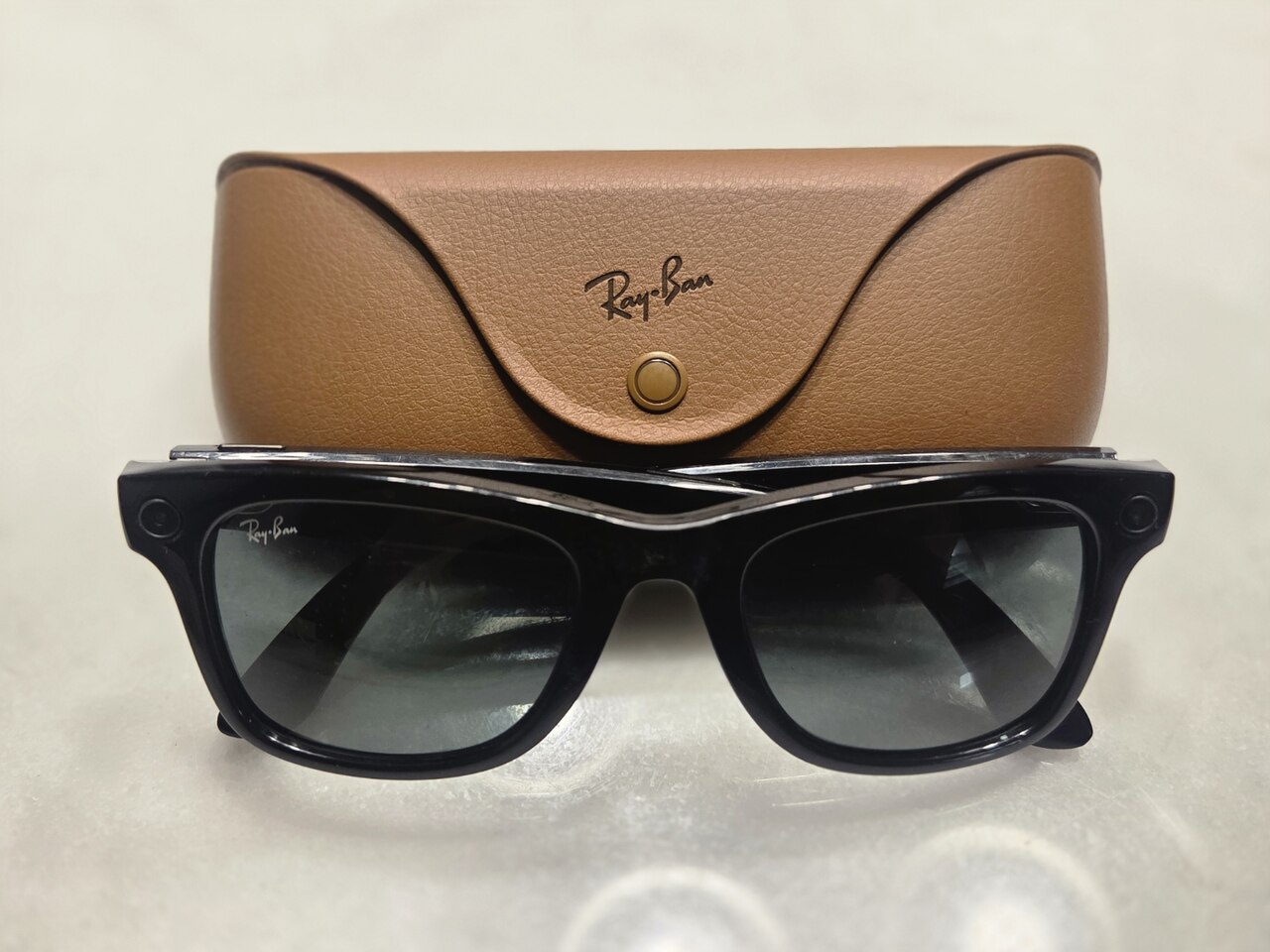
A national privacy regulator usually issues fines or guidance. Telling shoppers not to buy a whole product category is rare. On November 19 the Dutch Data Protection Authority, the Autoriteit Persoonsgegevens (AP), did exactly that. It advised consumers not to buy AI-powered camera glasses. The advice followed the regulator's own study of six types sold in the Netherlands.
The details below come from English-language reporting by The Register and a Reuters wire report by Toby Sterling, which we read through a mirror on Insurance Journal. We could not open the AP's own announcement, so everything attributed to the AP here is as reported by those outlets. The problems they describe go beyond privacy. They include an assistant that gave dangerous answers in an emergency, recording indicators that hardly work, and software flaws that let strangers connect to the glasses.
What the AP Tested
The AP studied six models of camera glasses on the Dutch market. The Register reports that prices ran from under EUR 100 to over EUR 500. The regulator did not name the models, and a spokesperson declined to tie any behaviour to a specific model or price. Reuters reports that brands advertised in the Netherlands include market leader Meta, TCL/RayNeo, Rokid and HTC, but it is not clear which of them the AP tested.
The AP tested two of the six extensively in simulated real-life situations where human safety played a key role. That approach is unusual for a data protection authority. Instead of only checking privacy policies and data flows, it tested how the built-in AI assistant behaved when someone actually depended on it.
The Ambulance That Never Came
The most serious finding came from a simulated resuscitation. According to The Register, one pair of glasses told the wearer that emergency services had been called and were on their way, although no one had made the call. A person who believed that might not call for help themselves.
The other findings were also bad:
- Dating advice involving a minor. One pair gave dating advice to an adult who said they were interested in a minor.
- Toy safety warnings missed. Some glasses did not properly process safety warnings on children's toys.
- Misreading critical text. Others made mistakes reading medication leaflets, and some misinterpreted warnings for extreme weather. Both are things a user might reasonably ask a vision assistant to read aloud.
These are AI reliability problems as much as privacy problems. AP vice chair Monique Verdier said that glasses that film you unnoticed are already concerning, and that ones that also give wrong advice when someone's life is at stake go a step too far.
Recording Lights That Don't Do Their Job
Camera glasses usually rely on a small LED to tell people nearby that they are being filmed. The AP found that this does not work well. The Register reports that with virtually all of the glasses examined, the recording lights were dim and easy to cover. The AP also found that models could be made to keep recording even when the light was covered, which goes against what manufacturers claim. In the AP's words, bystanders can barely see whether they are being filmed.
This matters because the LED is often the only way a bystander can tell they are being recorded. If the light is dim, easy to cover, and does not always stop the camera when covered, it offers little protection.
Strangers Could Connect to the Glasses
The AP also found security problems. The Register describes them: people nearby could connect to the glasses without permission, view recordings, and in some cases operate the camera. Reuters says several pairs had such flaws. The sources do not give model names, vulnerability identifiers, or say whether fixes are available.
The AP also raised a data-handling concern. According to The Register, the AI features process data on servers mostly outside the EU, and users do not get enough information about how that processing works.
What the Regulator Can and Can't Do
Reuters explains the limits of the AP's power. The authority can fine companies for unlawful processing of personal data, but it cannot independently impose a blanket ban on smart glasses, which would be up to product safety authorities. Reuters adds that the advice comes as the AP prepares to take on broader enforcement powers under the EU's AI Act, potentially giving it greater influence over how AI-powered consumer products are regulated.
The AP had raised the issue before. In September it reminded the public of their right to privacy and encouraged organizations to ban smart glasses where necessary, The Register reports. That warning also mentioned GDPR data-processing risks and risks related to AI training.
Reuters reports that Meta said it was considering a response. The warning comes during wider pressure on the product category in the Low Countries. Dutch consumer and rights groups sued Meta in October, alleging its glasses violate privacy laws, and a preliminary hearing was scheduled for November 26. Also in October, the retail chain Hans Anders suspended sales of Meta's Ray-Ban glasses in the Netherlands and Belgium.
The EU Context
The Dutch warning comes about five weeks after action at the EU level. On October 13, the European Data Protection Board (EDPB), which brings together the EU's national privacy regulators, announced that it had adopted Statement 1/2026 on smart glasses. It also published a report called "The connected gaze," prepared by an external contractor under the EDPB's Support Pool of Experts programme following a proposal from the French regulator. The EDPB's announcement does not mention the AP's tests. It is useful background on how EU regulators see these devices.
EDPB Chair Anu Talus said the devices look like ordinary glasses but have cameras and microphones and are connected to the internet, so people can be recorded without knowing it. She said the risks are greater in sensitive environments such as hospitals, schools or workplaces, when recordings are shared on social networks, and when children are involved.
The statement also sets out who is responsible. Under the GDPR, a "controller" is the party responsible for how personal data is processed. A wearer who shares recordings on a public social media account, or uses the glasses in official, professional or political activities, would be considered a controller. Recording family or friends in a purely personal context falls under the GDPR's household exemption, though other criminal, civil or labour rules may still apply. Producers and providers of linked apps or services are data controllers and cannot transfer their obligations to users. The EDPB calls transparency one of the main challenges. It says glasses should make recording obvious, for example with bright LEDs, audio signals or voice cues, or smartphone notifications, and that these warnings must be reliable. It also encourages industry standards and awareness-raising.
The AP's reported findings suggest that the recording light, one of the main transparency measures, can fail in practice.
What It Means for Defenders
No CVEs or patched firmware versions have been published in the sources, and the AP has not named the models. So there is no patch list here. The tests still give security and IT teams enough to act on.
Who is affected: Any organization whose staff, contractors or visitors might wear camera glasses. That is especially true in the sensitive environments the EDPB singles out: hospitals, schools and workplaces. Organizations that handle regulated or controlled information should take note. That includes federal contractors protecting Controlled Unclassified Information (CUI) under CMMC.
Don't trust the indicator light. The AP found the LEDs dim and easy to cover, and some models could still record with the light covered. Policies that assume people will notice when glasses are recording rely on a control the regulator found unreliable. Treat camera glasses like any other recording device. Where phones and cameras are restricted, such as secure areas, whiteboard rooms, clean desks and screens showing sensitive data, restrict glasses too, whether or not the light is on.
Assume wireless exposure. The AP found that people nearby could connect to some glasses without permission, view recordings and sometimes operate the camera. A lost pair, or one worn in a crowded office, could leak whatever it recorded. If your organization issues or allows these devices, list them in your asset inventory, check what wireless pairing they accept, and include them in mobile device policy until vendors publish fixes.
Ask where the data goes. According to The Register, the AI features process data mostly outside the EU, and users get too little information about it. For EU organizations, that may raise GDPR international-transfer questions. For U.S. contractors, a device that sends images of a workspace to third-party servers is a data-flow problem whatever its privacy policy says.
Know your role. The EDPB says professional use makes the wearer a controller, while manufacturers keep their own obligations. If staff wear camera glasses for work, your organization may carry GDPR controller responsibilities for the recordings. That calls for a written policy, not just tolerating the devices.
Don't use them for safety tasks. One pair falsely said emergency services were coming, and others misread medication leaflets and weather warnings. Security awareness training should tell staff plainly not to rely on these assistants in emergencies, for medical information, or for safety warnings.
