
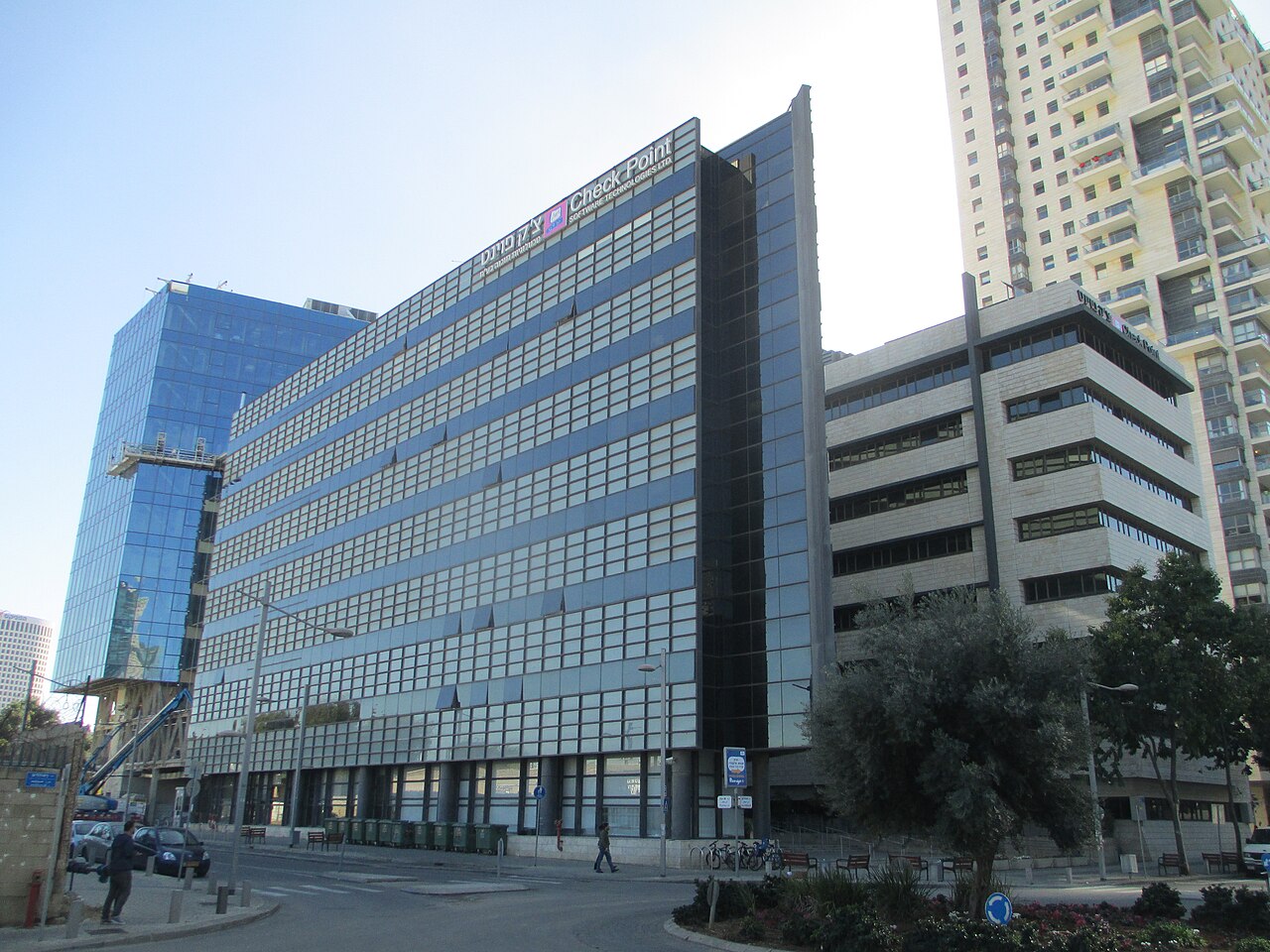
The appliance that guards the network edge has become the way in again. On November 13, the U.S. Cybersecurity and Infrastructure Security Agency (CISA) added CVE-2026-123039, a privilege escalation flaw in Check Point's Gaia operating system, to its Known Exploited Vulnerabilities (KEV) catalog. Federal civilian agencies have until November 16 to deal with it. Three days is a short deadline, even by KEV standards.
The bug is one part of a longer attack chain. According to Check Point Research, attackers got in through a pair of flaws the company calls PHP2Shell (CVE-2026-109618 and CVE-2026-109619) on gateways that expose the Mobile Access portal. They then used the Gaia flaw to become root, installed a backdoor, and in at least one case moved on to a VMware ESXi host and ran a wiper.
The root flaw, in plain terms
Gaia is the Linux-based OS that runs Check Point's Quantum security gateways and management servers. One of its components is a daemon called DynamicCLI. A daemon is a background service. CISA's catalog entry says this one runs as root and listens on a local socket, a communication endpoint on the box itself, that any local user can write to. The daemon does not check who is talking to it. As a result, anyone who already has an authenticated account on the appliance, even a low-privileged one, can make it run commands as root.
CISA classifies the weakness as "Incorrect Permission Assignment for Critical Resource" (CWE-732) together with missing authorization (CWE-862). The NVD record, published November 12 by Check Point acting as its own CVE Numbering Authority, gives it a CVSS 3.1 score of 7.8. The vector is local, low complexity, low privileges required. That score looks moderate on paper because an attacker needs local access first. In practice, PHP2Shell supplied that access.
NVD lists the record as "Undergoing Analysis," so its own scoring may still change.
How the campaign unfolded
Check Point Research published its analysis on November 12 and describes two distinct phases.
- October 30 onward: The first activity hit Israeli organizations, and some of those intrusions were destructive.
- November 2 onward: A broader wave reached organizations in several countries. Check Point says it has not seen destructive activity in this wave.
The Hacker News, reporting on Check Point's disclosure, says the vendor observed active exploitation against "a couple of dozen customers." It also reports that the first wave started roughly a week after a fix was made available. The timing shows how little room defenders had between a fix and exploitation.
Based on Check Point's write-up, the intrusion chain went like this:
- Initial access through PHP2Shell on the Mobile Access portal, the remote-access web front end that many organizations publish to the internet.
- Privilege escalation to root through the DynamicCLI flaw, CVE-2026-123039.
- Persistence through PHP webshells, which are small server-side scripts that give the attacker a remote command interface, plus a backdoor Check Point calls TSGA and a tunneling component called TSProxy. Check Point describes both as modified variants of a toolkit known as PhiliKit.
- Lateral movement over SSH from the compromised gateway to a VMware ESXi host.
- Destruction on the ESXi host: a wiper Check Point names destroy_v6, with politically themed notes called DREAM_ANNEXATION.txt left behind.
The pivot from firewall to hypervisor is what makes this serious. A compromised gateway is bad enough. A compromised gateway that can reach the management network of your virtualization cluster can put every virtual machine on the hosts it reaches at risk.
Who did it? Nobody is saying for sure
Attribution here is unclear, and the sources say so. Check Point notes that ESET has previously associated PhiliKit, a toolkit documented in attacks on Ivanti VPN appliances, with UNC5221, a China-nexus cluster. Check Point says it cannot assess with high confidence who is behind this campaign. It lists several scenarios as plausible, including that the operation involved a false flag and that the destructive activity was a smoke screen.
The timing and targeting of the destructive first wave, which focused on Israeli organizations, sit awkwardly next to a toolkit previously tied to a China-nexus espionage group. That mismatch is exactly why Check Point is hedging. ZeroDayFeed is not attributing the activity to any actor. Treat any confident claim you see elsewhere with suspicion until more evidence comes out.
CISA's entry marks known ransomware use as "Unknown."
What It Means for Defenders
Who is affected. According to NVD, CVE-2026-123039 affects Quantum Security Gateway and Management on these builds:
- R82.20 at Jumbo Hotfix Accumulator (JHF) Take 10 or below
- R82.10 at JHF Take 50 or below
- R82 at JHF Take 130 or below
- R81.20 at JHF Take 173 or below
The Hacker News reports that Check Point's advisory covers R82.20, R82.10, R82, R81.20, R81.10 and R81 across Force firewalls, Management and Log servers, Multi-Domain, and Maestro Orchestrator. If you run any of those, assume you are in scope until you have confirmed otherwise against Check Point's own advisory.
What to do, in order:
- Patch. Install a Jumbo Hotfix Take newer than the affected ranges above for your version branch. R81.10 and R81 appear in the advisory scope The Hacker News described but not in the NVD affected list for this CVE, so check Check Point's guidance for the fix path on those older branches.
- Reduce Mobile Access exposure. PHP2Shell was the front door. If your Mobile Access portal does not need to be reachable from the whole internet, restrict it to known source ranges or put it behind another access layer. If you don't use Mobile Access, make sure it is disabled.
- Hunt, don't just patch. Exploitation began about a week after a fix was available and well before this CVE was published. A patch closes the hole but removes nothing an attacker already left behind. Look for unexpected PHP files in web-facing directories, unfamiliar local accounts or SSH keys, and outbound connections from gateways you can't explain. Check Point's report names at least one source IP tied to the first wave. Search your logs for it.
- Check your hypervisors. If a gateway can reach ESXi management interfaces over SSH, review ESXi logs for logins from gateway addresses since late October, and look for missing or corrupted VM files. While you're there, ask whether that network path should exist at all.
- Rotate credentials stored on or passing through any gateway you suspect was compromised. That includes admin accounts, VPN-related secrets and any credentials used for SSH into other systems.
For federal agencies: CISA's entry says forensic triage is required under BOD 26-04, not only remediation. Patching by November 16 does not by itself meet the requirement.
For contractors working through CMMC: A perimeter device with a known-exploited root flaw is the kind of finding that belongs in your vulnerability management records and your incident response notes, whether or not you find signs of compromise. Write down what you checked and when.
The bigger picture
The same KEV update also added CVE-2026-114713 in UnrealIRCd. The Check Point entry deserves more attention, though, because it fits a pattern defenders know well by now. Attackers work their way through security appliances: a web-facing bug gets them in, a local privilege escalation gets them root, and the box's privileged spot on the network does the rest. The deadline is three days for agencies, and private organizations shouldn't take any longer.
Sources
- CISA Known Exploited Vulnerabilities catalog (JSON), entry for CVE-2026-123039
- NVD CVE API record for CVE-2026-123039
- Check Point Research: PHP2Shell Exploitation on Check Point Gateway
- The Hacker News: Hackers Exploit PHP2Shell Flaws in Check Point Gateways to Deploy TSGA Backdoor and Wipe ESXi Files
