
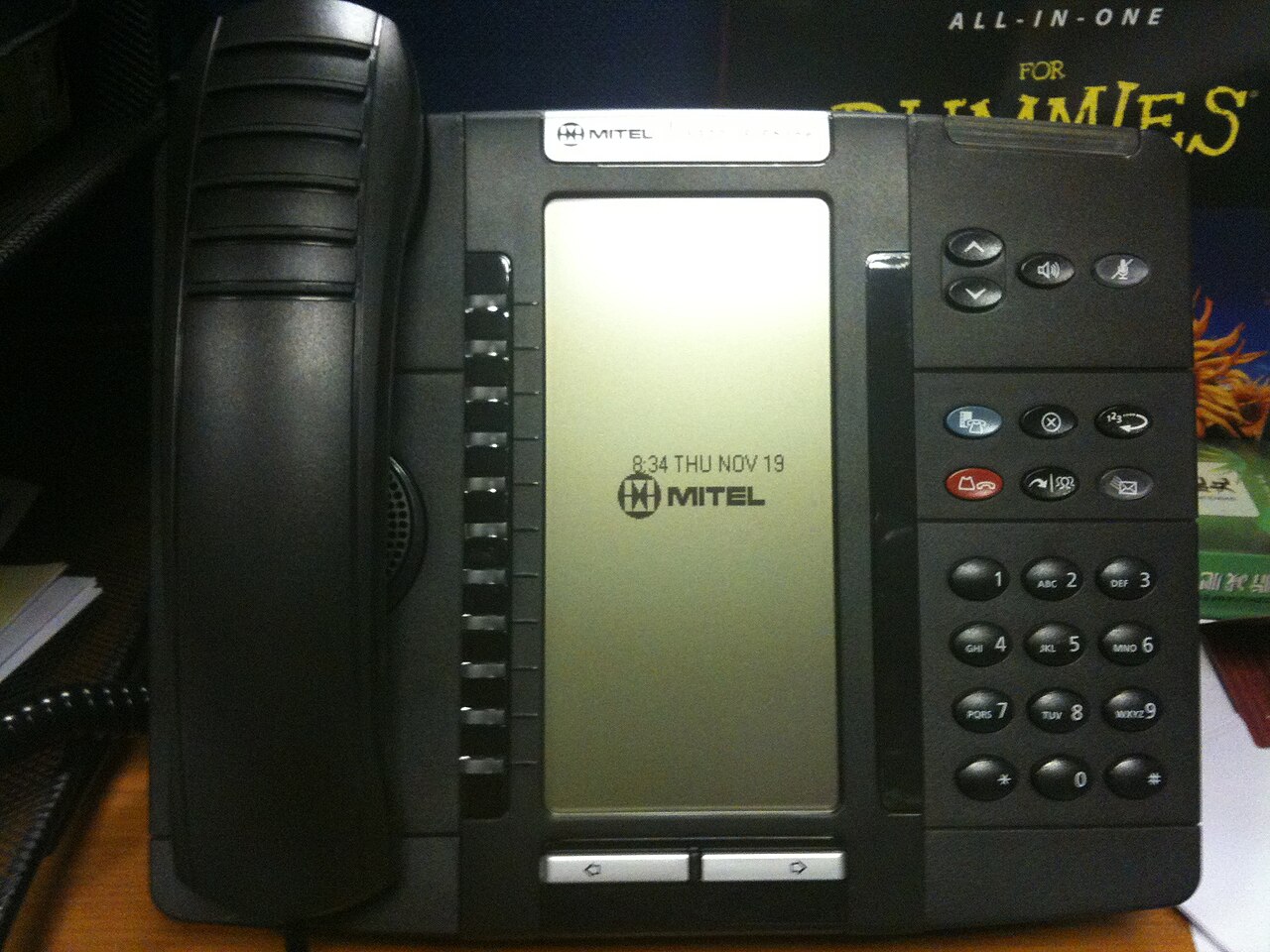
Patch Tuesday thinking assumes the vendor goes first. That didn't happen with Mitel MiCollab. Mitel published a security advisory on Nov. 16 for five flaws in the collaboration platform. According to incident responders at Accenture's APEX Labs, at least one organisation already had web shell activity on its MiCollab server before 23:00 UTC on Nov. 15, the day before the advisory's date.
On Nov. 25, the U.S. Cybersecurity and Infrastructure Security Agency (CISA) added all five MiCollab vulnerabilities to its Known Exploited Vulnerabilities (KEV) catalog. Four of them have a remediation due date of Nov. 28, three days after they were listed. The fifth is due Dec. 9.
If you run MiCollab and patched after the advisory came out, you are not finished yet. The question now is whether someone got in before you patched.
The five flaws
Mitel advisory MISA-2026-0012 was first issued on Nov. 16 and updated to revision 2.0 on Nov. 24. It covers MiCollab 10.3 (10.3.0.18) and earlier. Specifically, it covers the Audio, Web and Video Conferencing (AWV) component, the part of MiCollab that handles conferencing. Mitel describes each of the five bugs as exploitable by an unauthenticated attacker. One of them, CVE-2026-133311, also requires knowledge of a system-generated identifier or pre-staged content.
- CVE-2026-133323: blind command injection, CVSS 10.0. "Blind" means the attacker can't see the output of the commands they inject, but the commands still run on the server. The score reflects a network-reachable flaw that needs no credentials or user interaction and has a high impact on integrity and availability.
- CVE-2026-133303: XML injection, CVSS 9.0.
- CVE-2026-133311: unauthorized access, CVSS 5.9. Mitel says it could expose sensitive information but doesn't give access to arbitrary files elsewhere on the system.
- CVE-2026-133275: arbitrary file upload, CVSS 5.3.
- CVE-2026-133324: authentication bypass, CVSS 5.3.
Don't read too much into the medium scores on three of these. Mitel itself warns that exploiting the flaws together can significantly amplify their impact. Accenture's reconstruction of the confirmed intrusion shows the pattern: the attacker bypassed AWV authentication, uploaded files to the AWV component, and then ran commands through a web shell. Accenture doesn't say which CVE maps to each step. The Hacker News reported on Nov. 26 that there were no public details on how the flaws are being exploited in the wild, and we aren't going to fill that gap with guesses.
A timeline that starts before disclosure
Accenture APEX Labs published its analysis under the title "When patch day comes too late." It makes a high-confidence assessment that the flaws were exploited before Mitel disclosed them. That assessment rests on one victim, whose MiCollab server showed web shell activity before 23:00 UTC on Nov. 15. (A web shell is a small malicious script planted on a web server that gives an attacker a persistent remote control panel.)
Accenture reconstructed how fast the intrusion moved once it started:
- 12 minutes after the attacker's first request, the first command ran through the web shell.
- Within 30 minutes, the attacker had root, the highest level of control on the system.
- Within 32 minutes, the attacker authenticated to a domain controller. They did it with the LDAP connector credentials that MiCollab stores.
That last step is the one that should worry Windows administrators. Unified communications platforms like MiCollab usually connect to Active Directory so they can pull user directories. Those connections need a service account, and the credentials for that account live on the appliance. In this case, compromising a phone and collaboration server led straight to the identity system that controls the rest of the network, in about the time it takes to sit through a meeting.
It didn't stop there. Accenture says the actor went on to collect directory information, harvest credentials and, roughly 20 hours after the first request, reach a backup server and a line-of-business database server, where it dumped and exfiltrated database contents. The actor also edited local logs: system logs were reset during privilege escalation, and web-shell requests were later filtered out of the web server, error and admin logs. A clean-looking MiCollab log, in other words, proves little.
Accenture also assesses that AI-assisted tooling operating on the actor's server drove parts of the intrusion. Its evidence is circumstantial: sampled network traffic showed the actor's server contacting two commercial AI API services at the same second it sent the authentication-bypass request, and the victim's logs show a steady stream of commands during a window with no sampled operator traffic. Accenture notes the telemetry is sampled and it cannot say precisely how the actor used those services.
A second victim, and an earlier date
The Nov. 15 date may not be where the story starts. Accenture describes a second organisation whose MiCollab server has held a persistent HTTPS channel to the same actor's server since Nov. 9, a week before the advisory. Accenture has not determined how that server was compromised. It was running a MiCollab 10.0-series release that was vulnerable to both earlier and newly disclosed flaws, so Accenture can't say which vulnerability was the way in. What the evidence does show is shared attacker infrastructure across two victims, consistent with a broader campaign rather than a single intrusion.
Accenture has not linked the activity to a named group, and we won't attribute it either. It says the pattern of bulk data theft and credential harvesting is consistent with a data-theft extortion operation. CISA's KEV entries list known ransomware campaign use as "Unknown" for all five CVEs. Accenture also assesses that wider exploitation will follow now that the advisory is public.
Part of a larger KEV batch
The MiCollab entries were five of ten vulnerabilities CISA added on Nov. 25. The same batch included:
- Vates Xen Orchestra CVE-2026-133469, which The Hacker News lists at CVSS 9.8, also due Nov. 28.
- HPE Juniper Session Smart Conductor and Session Smart Router CVE-2026-103406, an OS command injection flaw, also due Nov. 28.
- Three Danfoss AK-SM 800A Series vulnerabilities (CVE-2023-25914, CVE-2023-25915 and CVE-2025-41450). Two are due Nov. 28 and CVE-2025-41450 is due Dec. 9.
Two of those products manage infrastructure and one is a line of refrigeration controllers. Like MiCollab, they are the kind of equipment that tends to sit outside the normal endpoint patching cycle. If you own any of them, the same urgency applies.
KEV due dates formally bind U.S. federal civilian agencies. A three-day window is short, though, and it tells everyone else how seriously CISA is treating the batch. Federal contractors, including those working toward CMMC, should treat a KEV listing on internet-facing infrastructure as a fix-it-now item.
What It Means for Defenders
Who is affected: Any organisation running Mitel MiCollab 10.3 (10.3.0.18) or earlier. The highest risk is where AWV is reachable from the internet. Accenture notes MiCollab is commonly internet-facing and connected to services such as Active Directory.
Patch: Mitel's fix is a patch for release 10.3 (10.3.0.18) or an upgrade to a later release. Its knowledge base article KB000129195 has the details. Four of the CVEs (CVE-2026-133275, CVE-2026-133303, CVE-2026-133323 and CVE-2026-133324) have a KEV due date of Nov. 28. CVE-2026-133311 is due Dec. 9. Patch for all five at once rather than staging them.
If you can't patch immediately: Mitel's workaround is to restrict external access to AWV. This reduces exposure but does nothing about a compromise that has already happened. Accenture also warns that a reverse proxy, including a MiVoice Border Gateway web proxy, should not be assumed to protect the AWV component: in the confirmed intrusion, the exploitation requests passed through one.
Assume you may have been hit before you patched. Exploitation started before disclosure, and in one case contact with the attacker's infrastructure goes back to Nov. 9. That means a patched server can still be a compromised server. Practical steps:
- Hunt for web shells on MiCollab servers: unexpected files in web-accessible directories, especially anything created or changed from early November onward.
- Don't rely on local logs. The actor edited them. Upstream proxy or web application firewall logs and disk images are more reliable evidence, per Accenture.
- Review outbound connections. Look for long-lived or repeated HTTPS sessions from the MiCollab server to unfamiliar external hosts. Accenture's second case was identified through a persistent channel of exactly this kind.
- Rotate the LDAP connector credentials stored on MiCollab, plus any other service account secrets on the box. In the confirmed intrusion, those credentials were the attacker's route to a domain controller.
- Check domain controller logs for authentication by the MiCollab service account from unusual sources or at unusual times. Look for anything that account did beyond its normal directory lookups.
- Look for privilege escalation on the appliance itself, such as new root-level accounts, scheduled tasks or changed system binaries.
- If you find signs of compromise, treat it as an Active Directory incident, not just an appliance rebuild. In the confirmed case the actor moved on to domain controllers, internal file shares, a backup server and a database server.
The broader lesson: Unified communications servers are internet-facing, privileged and connected to the directory, yet they often get patched on a slower schedule than Windows endpoints. In this case, the gap between first request and domain controller access was 32 minutes. Any internet-facing appliance that stores AD credentials should be in your fastest patching tier and your closest monitoring.
Sources
- Mitel Product Security Advisory MISA-2026-0012 (MiCollab Multiple Vulnerabilities)
- Accenture APEX Labs: When patch day comes too late: MiCollab flaws exploited before disclosure
- CISA Known Exploited Vulnerabilities catalog (JSON feed)
- The Hacker News: Hackers Exploit 10 Vulnerabilities Across Mitel, Juniper, Vates, and Danfoss Products
