
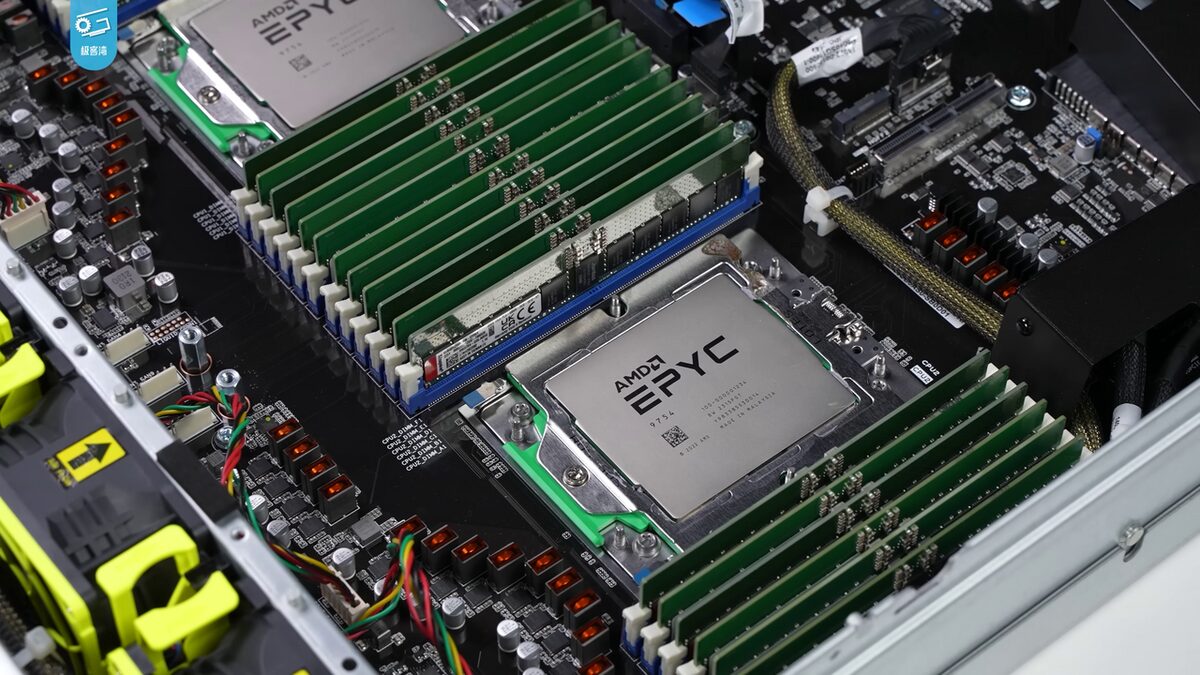
Confidential computing makes a big promise: even if the machine your virtual machine runs on is controlled by someone you don't trust, including your cloud provider, a rogue admin or an attacker who has taken over the host, the data inside your VM stays private. AMD's version of that promise is SEV-SNP (Secure Encrypted Virtualization with Secure Nested Paging), built into its EPYC server processors. This week, two research teams showed two separate ways to break it.
The attacks, called Mior and Skyfall, were made public alongside two AMD security bulletins. Both assume the attacker already controls the hypervisor, the software layer that runs the VMs. That's a lot of access, and it fits the CVSS 4.0 base scores AMD assigned, 5.9 and 4.9. But a malicious hypervisor is exactly the threat SEV-SNP exists to stop. If you run confidential VMs, or sell them, these two bugs land squarely on what you're paying for.
AMD shipped the low-level fixes in August. Most operators can't install those directly, though. They arrive in BIOS packages from server makers, and AMD has those targeted for November (Skyfall) and December 2026 (Mior).
Mior: Steering the Security Processor's Writes Somewhere Else
Mior comes from researchers at ETH Zurich and is tracked as CVE-2026-0462. AMD's bulletin, AMD-SB-3059, puts it in one sentence: a malicious hypervisor may manipulate MMIO routing, which can compromise SEV-SNP integrity. MMIO, or memory-mapped I/O, is how a system maps hardware devices into the same address space as ordinary memory, so a write to a given address can land in RAM or on a device.
According to The Hacker News' account of the research, Mior goes after the RMP, the table SEV-SNP uses to keep track of which memory belongs to which VM. When the platform starts up, AMD's Platform Security Processor (PSP) writes that table out. Mior redirects those initialization writes into a GPU's memory, so part of the real RMP never gets initialized. With that hole in place, the researchers turned on debug mode for a confidential VM and read and wrote its memory. It worked in all 1,000 of their attempts. In a second test, they made a malicious VM's attestation reports describe a harmless VM's software image. Attestation reports are the signed statements a confidential VM uses to prove to a remote party what it is running and that it's on genuine hardware.
Forged attestation is the worst part of the finding. Attestation is how a customer decides whether to hand secrets to a VM in the first place. If the reports can be faked, a relying party could release keys or data to an environment that is already compromised.
The attack has steep requirements. According to the report, the attacker needs control of the hypervisor and the BIOS, plus a PCIe device. The researchers tested on one machine, an EPYC 9135 (Zen 5). AMD's CVSS 4.0 vector reflects this: local access, high privileges required, and impact limited to the integrity of the protected system (SI:H), for a base score of 5.9. AMD files it under CWE-1220, insufficient granularity of access control.
AMD says only SEV-SNP is affected. The older SEV and SEV-ES modes are not.
Skyfall: Leftover Register Data and a Side Channel
Skyfall, tracked as CVE-2026-40671, is a different kind of bug. It's the work of Benedict Schlüter, Alessandro Vezzù, Daniel Moghimi and Shweta Shinde of ETH Zurich and Google, and it builds on Transient Scheduler Attacks (TSA), a class of AMD CPU side channels. A side channel lets an attacker infer data from how the processor behaves, such as timing, instead of reading it directly.
AMD's bulletin, AMD-SB-3061, describes the root cause as an incomplete-cleanup flaw (CWE-459) in VMRUN error handling. VMRUN is the instruction that switches the CPU into a guest VM. When that path hits an error, it can leave SEV-SNP guest register data behind, and a privileged attacker can then pick it up through the TSA side channel. AMD scores it 4.9 under CVSS 4.0.
On the researchers' project page, the paper describes three attacks built on the technique:
- extracting SEV-SNP guest state,
- recovering decrypted microcode patches,
- leaking protected System Management Mode (SMM) state, the highly privileged firmware mode that sits below the operating system.
The Hacker News reports that the team pulled a disk-encryption key out of a test VM. They demonstrated the attack on an EPYC 7313 (Zen 3) and on EPYC 9124 and 9334 parts (Zen 4), but not on Zen 5. There's also a real limit on what leaks: only three fixed cache lines of a page are readable.
The paper has been accepted to IEEE Security & Privacy 2027. It didn't go through review without criticism, though. According to The Hacker News, the S&P program committee said the paper overlooks what a realistic attack on VMs would actually require. That's useful context. The vulnerability is real, AMD assigned a CVE, and the researchers' disclosure led to new microcode. How easily it turns into a practical attack on production cloud tenants is still an open question.
So How Worried Should You Be?
It depends on who you are.
If you don't use confidential VMs, neither bug changes much for you. Both attack SEV-SNP's guarantees against a hostile host. If you already trust your host, an attacker in the hypervisor has plenty of easier options than these.
If you rent confidential VMs from a cloud provider, you're relying on the provider to install AMD's fixes. You can't patch the host's microcode, SEV firmware or BIOS yourself. Both attacks need privileged host access, so the realistic threat is a compromised or malicious host. That's the scenario confidential computing exists to handle, and it's why some customers pay for it.
If you operate SEV-SNP hosts, whether as a cloud, a hosting company or an enterprise running confidential workloads for regulated data, this is your patch cycle. It runs through your server vendor.
What It Means for Defenders
Who is affected: Operators and tenants of AMD SEV-SNP confidential VMs on EPYC server processors. AMD's bulletins list fixes for the EPYC 7003, 8004, 8005, 9004 and 9005 families, plus embedded EPYC parts. According to The Hacker News, AMD Instinct MI300A also received a Skyfall patch. Mior affects only SEV-SNP, not SEV or SEV-ES.
What AMD has released (dated August 12, 2026):
- Mior (CVE-2026-0462): SEV firmware updates, including version 1.3A.03 for EPYC 7003, 1.3A.4 for EPYC 8004/9004, and 1.3A.0A for EPYC 8005/9005.
- Skyfall (CVE-2026-40671): Microcode mitigations, including Milan-B1 0x0A0011E1, Milan-B2 0x0A00124E and Turin Classic 0x0B002176. Per AMD's bulletin, the Instinct MI300A Skyfall patch is dated September 21.
When the BIOS packages land:
- Skyfall: Platform Initialization (PI) firmware for EPYC 7003, 8004, 8005, 9004 and 9005 is targeted for November 2026.
- Mior: PI firmware such as MilanPI-SP3_1.0.0.L, GenoaPI_1.0.0.K and TurinPI_1.0.0.C is targeted for December 2026.
- Embedded EPYC: Fixes come later. AMD lists February 2027 for some Mior fixes, and The Hacker News reports embedded fixes spanning January to April 2027.
What to do now:
- Inventory your SEV-SNP hosts by EPYC generation, and record their current SEV firmware and microcode versions so you can compare them with the versions above.
- Contact your server vendor. AMD's bulletins tell customers to get BIOS updates from their OEM. Supermicro has already published a BIOS fix list. According to The Hacker News, affected Supermicro boards also need a BMC (baseboard management controller) firmware update, so don't stop at the BIOS.
- Lock down BIOS and hypervisor access. Mior needs BIOS control and a PCIe device in addition to the hypervisor, and both attacks need high privileges. Until the patches are in, limiting who can flash firmware, change BIOS settings or attach hardware is the most practical mitigation you have.
- Cloud tenants: ask your provider when its SEV-SNP fleet will run the patched microcode, SEV firmware and PI firmware, and whether attestation reports will reflect the updated firmware versions so you can check for yourself.
- Re-check attestation policies once the patches are deployed. Mior showed attestation reports can be manipulated on unpatched systems. After your environment is updated, consider requiring the patched firmware versions in your attestation checks before releasing secrets to a VM.
- Consider rotating secrets such as disk-encryption keys held in confidential VMs if you have reason to think a host was compromised. Skyfall's demonstration recovered exactly that kind of key from a test VM.
Neither attack is an emergency for the average sysadmin. Both are serious for anyone whose security model depends on not trusting the host, and the BIOS fixes for that group are still a few weeks away.
Sources
- AMD-SB-3059: AMD Secure Encrypted Virtualization (SEV) Vulnerability (AMD)
- AMD-SB-3061: AMD SEV Incomplete Cleanup Vulnerability (AMD)
- New Mior and Skyfall Attacks Let Rogue Cloud Hosts Steal Secrets From AMD SEV-SNP VMs (The Hacker News)
- SKYFALL: Microarchitectural Data Sampling on AMD (researchers' project page)
